
GPs reject unilaterally imposed contract
Practice Nurse 2026;56(2):5
The BMA’s GP committee for England (GPCE) has overwhelmingly voted to reject the Government’s ‘unrealistic and unsafe plans’ to impose changes to GP practice contracts, calling for the Government to directly negotiate a new practice contract.
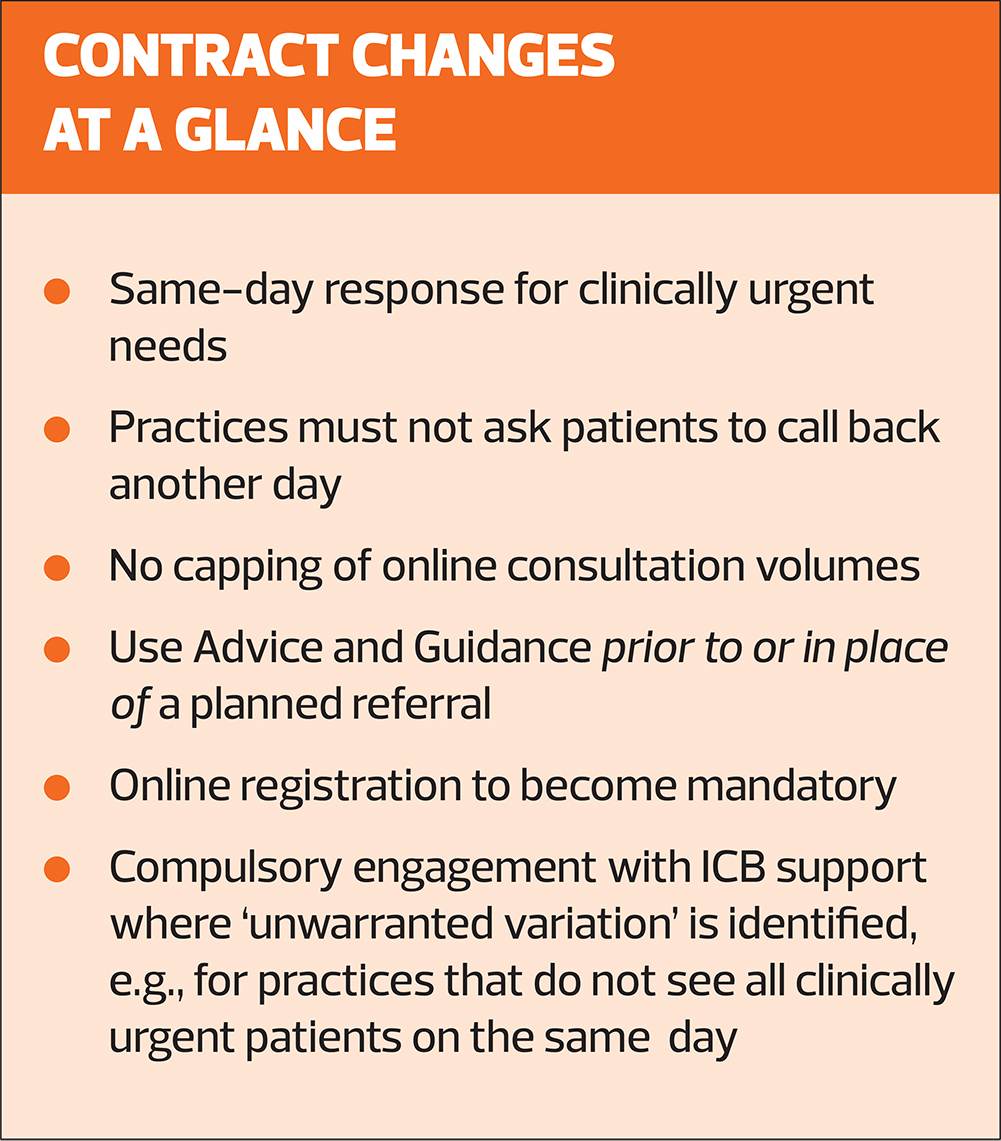
The 2026/27 contract will require practices to ensure unlimited same-day access to patients with clinically urgent needs, forbidding them from capping the number of consultation requests they can respond to even when they are full.
The use of advice and guidance services will be embedded in the contract, which also includes steps to ensure that patients have timely access to online and video consultation data.
However, the introduction of an incentive scheme for practices struggling to hit child immunisation thresholds in vaccine-hesitant populations has been cautiously welcomed by the association.
The key areas of dispute include:
- Unilateral imposition: The BMA stated they were not allowed to negotiate the contract directly, breaking with traditional processes.
- ‘Unrealistic’ demands: The requirement for unlimited same-day access is seen as impossible to deliver, with concerns that it will force more practice closures.
- Insufficient funding: The proposed funding increases do not match the BMA's request for a £50 per patient uplift.
- Patient safety concerns: The BMA warned that the ‘digital-first, patients-last’ approach, combined with high demand, creates an unsafe environment.
GPC England chair Dr Katie Bramall said: ‘The “open-floodgates” strategy which has been drowning general practice since October is not going away – the Government is turning general practice into a digital-first, patients-last, unsafe primary care model where the result is a far poorer patient experience.
‘Patient list sizes compared with GP numbers are still dangerously high; continuity of patient care is rapidly declining; and we have lost over 6,000 (around 28%) of the GP partners who actually run practices since 2015. Government must work with us to bring general practice back from the brink of extinction; this contract will not do that.
‘GPs are hardworking, dedicated professionals, but we are not magicians. We can’t bend the rules of physics and provide unlimited same-day urgent care as well as unlimited planned and routine care, all whilst hospital trusts are enabled to reject our referrals so that we are trying to manage the impossible and unsafe. Premises are outdated and crumbling, demand is spiralling out of control without the workforce or resource to support it, and despite Government rhetoric we are drowning in bureaucracy. GPs are in despair, uncertain how on earth they can achieve the Government’s unrealistic expectations, and fear this contract will increase the risk of further practice closures.
GPCE has launched a referendum of all GPs and GP Registrars across England on the changes that will be imposed from 1 April.
KEY CHANGES
- Investment in the GP contract will increase by £485 million to £13,863 million providing a 3.6% cash growth, or 1.4% in real terms.
- Practice-level GP reimbursement scheme to enable practices to recruit new GPs or increase the number of sessions from currently working GPs.
- The Additional Roles Reimbursement Scheme (ARRS) will be amended to allow the recruitment of more experienced GPs, not just those who are newly qualified.
QOF will be updated to include:
- Two new obesity indicators to support referrals to structured weight management programmes and medicines optimisation (portrayed in the national press as ‘GPs to be paid to prescribe weight loss jabs’).
- Improvement thresholds for the three childhood immunisation indicators to reward practices that demonstrate ‘meaningful and sustained’ improvement in vaccination uptake, particularly in more deprived areas that may not meet existing achievement thresholds.
- A new diabetes indicator requiring delivery of all 8 NICE-recommended care processes.
- Updating the heart failure indicators to reflect the NICE-recommended ‘Four pillars’ of treatment – ACE inhibitors, beta-blockers, SGLT2 inhibitors, and MRAs
Related news
View all News