Avoid blanket switching of inhalers, says PCRS
Practice Nurse 2026;56(6):6
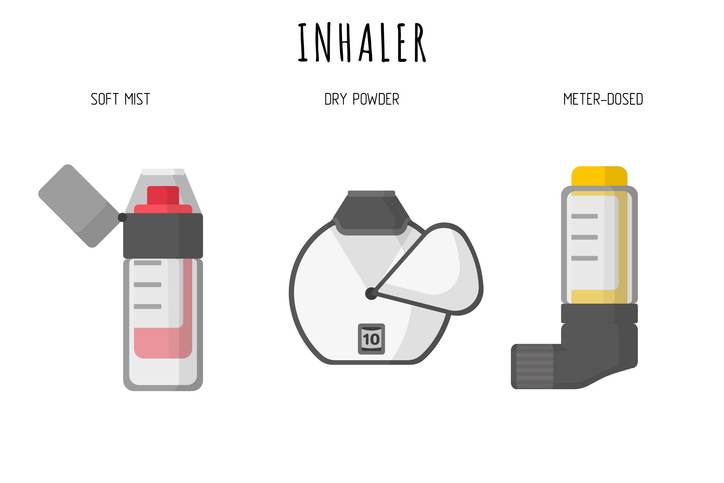
The Primary Care Respiratory Society (PCRS) has updated its position statement on switching pressurised metered dose (pMDI) inhalers used in the management of respiratory conditions.
Concerns about the environmental impact of the propellant gases used in pressurised metered dose inhalers (pMDIs), which are highly potent global warming agents, and the plastics used in all single-use inhaler devices have made them an important focus for efforts to reduce the environmental impact of the NHS.
The NHS Sustainability Development Unit estimates that about 3% of NHS greenhouse gas emissions are the result of inhaler use, and the NHS accounts for 4–5% of the overall greenhouse gas emissions in the UK.
Most inhalers are designed as single-use devices, and very few are returned to pharmacies for recycling.
Patients themselves may also be concerned about the environmental impact of their inhalers and express a preference for alternatives.
In addition, Integrated Care Boards (ICBs) in England, as well as healthcare commissioners’ services in other devolved nations, are under financial pressure to reduce the costs of medicines, which includes inhalers.
PCRS believes that optimising treatment, adherence and inhaler technique to gain the best possible symptom control is key to reducing the environmental impact of treatment and the waste of inhalers. Appointments to review a patient’s inhaler treatment or respiratory condition should be used as an opportunity to improve outcomes, including a regular observed review of inhaler technique. PCRS supports initiatives to reduce the environmental impact of respiratory care if patient outcomes are not compromised. PCRS does not support blanket switching of inhalers. Such approaches:
- Are not patient-centred
- Risk worsening disease control
- Do not represent good clinical practice
All decisions regarding inhaler changes must:
- Be made collaboratively with the patient, considering equity of access to engage with shared-decision making and adapting to their inhalers
- Be based on a clinical review by an appropriately trained healthcare professional
- Prioritise optimal individual patient care
- Must not override clinical safety and effectiveness even though environmental considerations are important
The PCRS is also calling for a national inhaler recycling scheme and greater public awareness to encourage the return of inhalers to pharmacies instead of sending them to landfill.
PCRS Position Statement on Inhaler Switching.
https://www.pcrs-uk.org/resource/current/pcrs-position-statement-inhaler-switching-making-safe-and-clinically-appropriate# (https://www.pcrs-uk.org/resource/current/pcrs-position-statement-inhaler-switching-making-safe-and-clinically-appropriate)
Related news
View all News