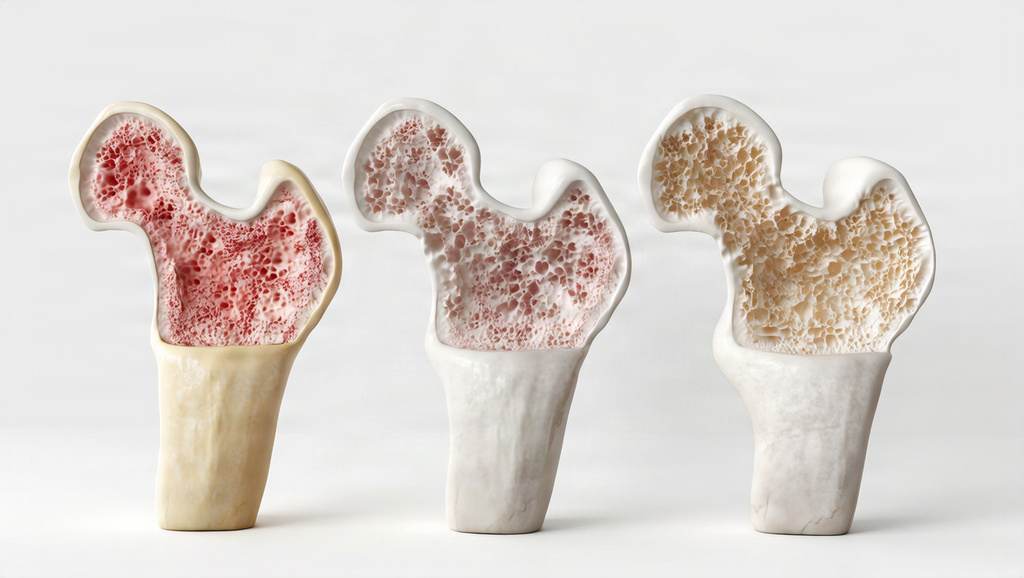
Osteoporosis: assessing risk
Mandy Galloway, Editor
Practice Nurse Oct 2026;56(5): online only
There is currently a significant gap between those who are at risk of fragility fractures and those who receive appropriate preventive treatment. This guideline summary aims to increase GPNs’ knowledge and confidence about osteoporosis, enabling them to understand who is at risk of a fragility fracture and to offer informed advice to their patients
Risk assessment rates for osteoporosis vary around the UK, particularly for people who have not had a fragility fracture. So while NICE’s recommendations for who should be assessed remain largely unchanged from its previous guideline in 2012, it is hoped that the latest guidance will raise awareness and increase the number of people being assessed for fracture risk.1
To reduce fracture incidence, international guidelines recommend the systematic identification of individuals with risk factors, bone health assessment, and initiation of bone-sparing treatment where indicated. There is, however, a very large gap between those individuals who need treatment and those who actually receive it.2
General practice has a role in both primary and secondary fracture prevention: while secondary prevention is led by Fracture Liaison Services in secondary care, in practice these only cover about half of NHS trusts, and do not identify all patients who are at risk, do not usually discuss osteoporosis medications with patients, and do not prescribe them.2
Recent research has found that general practice nurses and advanced practitioners are considerably less confident than GPs in explaining osteoporosis to patients, identifying patients requiring risk assessment, interpreting bone density results, recommending osteoporosis medications and counselling patients about treatment.2
NICE’s new guideline hopes to close the treatment gap: demand for dual-energy X-ray absorptiometry (DXA) scans and treatment costs are expected to increase – but should result in future savings because of the reduced incidence of fragility fractures in the long term.1
Who is at risk?
NICE recommends assessing fragility fracture risk in all people over 50 and postmenopausal women with a previous fragility fracture or current or frequent use of systemic glucocorticoids (e.g. 5mg prednisolone daily for over 3 months, or intermittent use of higher doses unless this is a replacement dose for adrenal insufficiency).
Consider assessing fragility fracture risk in:
- Men over 75 years
- Women aged 65 and over
- People aged 50 to 74, and postmenopausal women under 65, with any of the following risk fractures:
- History of 2 or more fails in the last year
- History of hip fracture in a first degree relative
- Low BMI (less than 18.5 kg/m2)
- Current smoker
- Alcohol intake of more than 14 units per week
- Other factors associated with increased risk of fragility fracture.
- Various conditions are associated with increased risk of fragility fracture. These include:
- Endocrine conditions such as diabetes (type 1 and 2), hyperthyroidism, Cushing’s disease, hypogonadism including untreated early menopause and premature ovarian insufficiency, and treatment with aromatase inhibitors or androgen deprivation therapy.
- Gastrointestinal conditions, especially if associated with malabsorption, including coeliac disease, inflammatory bowel diseases, chronic liver disease, chronic pancreatitis
- Neurological conditions, including Parkinson’s disease, and disease or injury that causes prolonged immobility, e.g. stroke, multiple sclerosis
- Respiratory diseases include cystic fibrosis and COPD
- Rheumatoid arthritis and other inflammatory arthropathies
Other potential risk factors include eating disorders associated with low BMI; CKD stage 4 and 5; prolonged immobility; inherited metabolic diseases; and taking medications associated with increased fracture risk: these include anticonvulsants, selective serotonin reuptake inhibitors, thiazolidinediones, proton pump inhibitors and antiretroviral medicines.
When assessing fracture risk in trans or non-binary people, an individualised risk assessment should include sex registered at birth, hormonal history e.g. puberty suppression, gender-affirming hormone therapy or menopause, and current hormone treatment.
Risk prediction tools
NICE recommends using either FRAX or QFracture to calculate the 10-year risk of a major osteoporotic fracture. FRAX should be used for people aged 40 – 90, and QFracture should be used for those between 30 and 39.
A 10-year risk of 10% or more should be used to determine who should have a DXA scan. Using a lower threshold, i.e. 5% could lead to over investigation, while a 20% threshold could lead to missed opportunities for early treatment and prevention of fragility fracture.
People aged under 30 who require risk assessment, those with suspected idiopathic osteoporosis or pregnancy-associated osteoporosis, or suspected rare bone disease such as osteogenesis imperfecta, should be referred to a specialist.
Bone density assessment
A DXA scant to measure bone mineral density (BMD) should be offered to people aged 30 or over who have had a previous hip or vertebral fragility fracture, a single major fragility fracture in the last 2 years, or 2 or more fragility fractures.
Pharmacological treatment
Deciding who will benefit from pharmacological treatment is not clear-cut. Risk assessment to predict a person’s 10-year risk of major osteoporotic fracture may give an estimate of how likely it is that they will have a hip, spine, shoulder or wrist fragility fracture but predicted risk should not be used alone to decide whether treatment is appropriate. Other considerations include the individual’s clinical circumstances and whether treatment is likely to reduce future fracture risk, as well as how recently a previous fracture has occurred – the greatest risk of a subsequent fragility fracture is in the first 2 years after the initial fracture.
Treatment should be considered for people taking high-dose systemic glucocorticoids, and for people with a low BMD (T-score of -2.5 or less). There is less evidence for treatment benefit in individuals with a higher BMD. BMD measurement, where available, therefore allows clinicians and people at risk to make an informed choice.
Make a shared decision on initiating treatment for people with:
- 10-year risk of major osteoporotic fracture obtained from FRAX or QFracture
- BMD from a DXA scan
- BMD T-score of -2.5 or less (osteoporosis)
- BMD T-score of -1.5 or less (osteopenia) with additional risk factors
- The number, timing and sites of previous fragility fractures
Treatment may also be appropriate for people who have not had a DXA scan because it was not tolerated or technically feasible, if their condition meets at-risk criteria above.
Seek specialist advice for men and pre-menopausal women aged under 50 if they have had a major osteoporotic fracture; significant decrease of BMD on serial measurements; suspected or confirmed idiopathic osteoporosis; anyone, including trans men and non-binary people, with suspected or confirmed rare forms of osteoporosis or bone disease.
Follow-up for people not having treatment
Some people whose condition meets the criteria for treatment may decline it, for a number of reasons, such as wanting to try lifestyle changes first; to treat a different condition, e.g. dental problems or cancer; adverse effects of treatment; or personal reasons – caring responsibilities, for example.
For these people, it is important to agree a timescale for revisiting their decision to ensure they can access treatment should they wish to do so later, and to re-assess their risk because this will increase with age, even if they have no new risk factors.
Reassessment and monitoring
There is limited evidence on the best timing for further assessment. However, the NICE guideline development committee agreed that reassessment should generally be considered after 5 years. This interval is likely to be long enough for age-related changes in bone health to become apparent.
Reassessment should be considered sooner if there is a change in clinical circumstances that could negatively affect bone health.
When reassessing risk:
- Use a DXA scan to measure bone mineral density.
- Do not rely on repeating FRAX or QFracture alone, as these tools may be unlikely to show a meaningful change in 10-year fracture risk.
- Consider whether bone density has reduced to a level at which treatment may now be advisable.
- Do not repeat DXA scans within 2 years, as this period is too short to show a clinically meaningful change in BMD.
Treatment
NICE is currently developing a new guideline on the treatment and monitoring of osteoporosis, due to be published late in 2027. Meanwhile, the following recommendations are taken from the Clinical Knowledge Summary topic on management of osteoporosis, last updated in 2025.3
- If bone-sparing treatment is indicated, offer an oral bisphosphonate:
- Alendronate 70mg once weekly or risedronate 35mg once weekly
- If unsuitable or not tolerated, offer ibandronate 150mg once monthly
- If an oral bisphosphonate is not tolerated (see administration advice below) or contraindicated, consider specialist referral. Specialist treatment options include:
- Zolendronic acid
- Strontium ranelate
- Raloxifene
- Denosumab, and
- Teriparatide.
- NB, all oral bisphosphonates are licensed for use in postmenopausal women but only risedronate is licensed for use in men.
- If the individual’s calcium intake is inadequate, prescribe
- 10 mcg vitamin D with at least 1000 mg of calcium daily
- For people who are housebound or living in residential care, offer 20 mcg of vitamin D with at least 1000 mg of calcium daily
- Consider prescribing hormone replacement to younger postmenopausal women to reduce the risk of fragility fractures and for the relief of menopausal symptoms.
Administration advice
Oral bisphosphonates must be taken on an empty stomach as their absorption is affected by food, drink and other drugs such as calcium supplements, antacids. NSAIDs may increase the risk of gastric irritation or bleeding if used concurrently with bisphosphonates. Coffee or orange juice reduces bioavailability of bisphosphonates by approximately 60%.
- Take alendronate at least 30 minutes before first food, medicine or drink other than plain water.
- Risedronate should be taken at least 30 minutes before first food, medicine or drink other than plain water. If not practical, it can be taken between meals but allow at least 2 hours before or after any food, medicine or drink other than plain water, or in the evening at least 2 hours after food, medicine or drink other than plain water.
- The tablet should be swallowed whole and taken with at least 200 ml of plain water. Do not suck or chew the tablet which increased the risk of oropharyngeal ulceration.
- The tablet should be taken while in an upright position: do not lie down for at least 30 minutes, do not take at bedtime or before getting up in the morning.
- Take weekly preparations on the same day each week.
- If a dose is missed
- Once-daily alendronate or risedronate: skip the missed dose and take the next dose as usual. Do not take a double dose.
- Once-weekly alendronate or risedronate: take the missed dose when remembered, then continue on the usual weekly day. Do not take 2 tablets on the same day.
- Patients should have a dental check up and any necessary remedial work before starting bone-sparing treatment. They should maintain good oral hygiene and attend regular check ups during treatment, tell their dentist they are taking bone-sparing medication, and report any symptoms of osteonecrosis of the jaw (pain, swelling, loose teeth or exposed bone) to their dentist
Lifestyle advice
Advise the individual to:
- Take regular exercise, especially
- Walking outdoors to increase exposure to sunlight and increase vitamin D production
- Strength training e.g. weight training to improve muscle strength in different body regions (hips, wrist, spine)
- Eat a balanced diet to help improve bone health
- Stop smoking if applicable
- Drink alcohol within recommended limits – alcohol is a dose-dependent risk factor for fragility fracture
Follow up
Check treatment tolerance after 12-16 weeks. Upper gastrointestinal effects such as dyspepsia or reflux are common in the first month of treatment but often improve with continuing use.
Check adherence after 12 months. Consider alternatives if adverse effects are unacceptable.
Reassess need for continuing treatment with oral bisphosphonates after 5 years. Continue treatment for 10 years for people who are at high risk of fragility fracture, including:
- Age 70 or over at start of bisphosphonate treatment
- Previous hip or vertebral fracture
- One or more fragility fractures during first 5 years of treatment
In other people, arrange DXA scan and consider:
- Continuing treatment for another 5 years if BMD T-score is -2.5 or lower
- Pausing treatment for 1.5 – 3 years if T-score is greater than -2.5, then reassess fracture risk.
Reassess fracture risk at any time if re-fracture occurs, or clinical risk factors change, or if the individual’s fracture risk was intermediate last time they were assessed, reassess after a minimum of 2 years.
Conclusion
Primary care has an important role to play in the identification, assessment and follow up of people at risk of osteoporotic fractures, but barriers such as lack of confidence, can contribute to the gap between those who would benefit from treatment and those who receive it. This guideline summary aims to help close that gap by equipping readers with greater knowledge of current recommendations.
References
- Hawarden A, et al. Osteoporosis care in primary care settings: a national UK e-survey. Arch Osteoporosis 2025;20:109
- NICE NG259. Osteoporosis: risk assessment; July 2026. https://www.nice.org.uk/guidance/ng259
- NICE CKS. Osteoporosis – prevention of fragility fractures: management; last revised, April 2025. https://cks.nice.org.uk/topics/osteoporosis-prevention-of-fragility-fractures/
Related guidelines
View all Guidelines