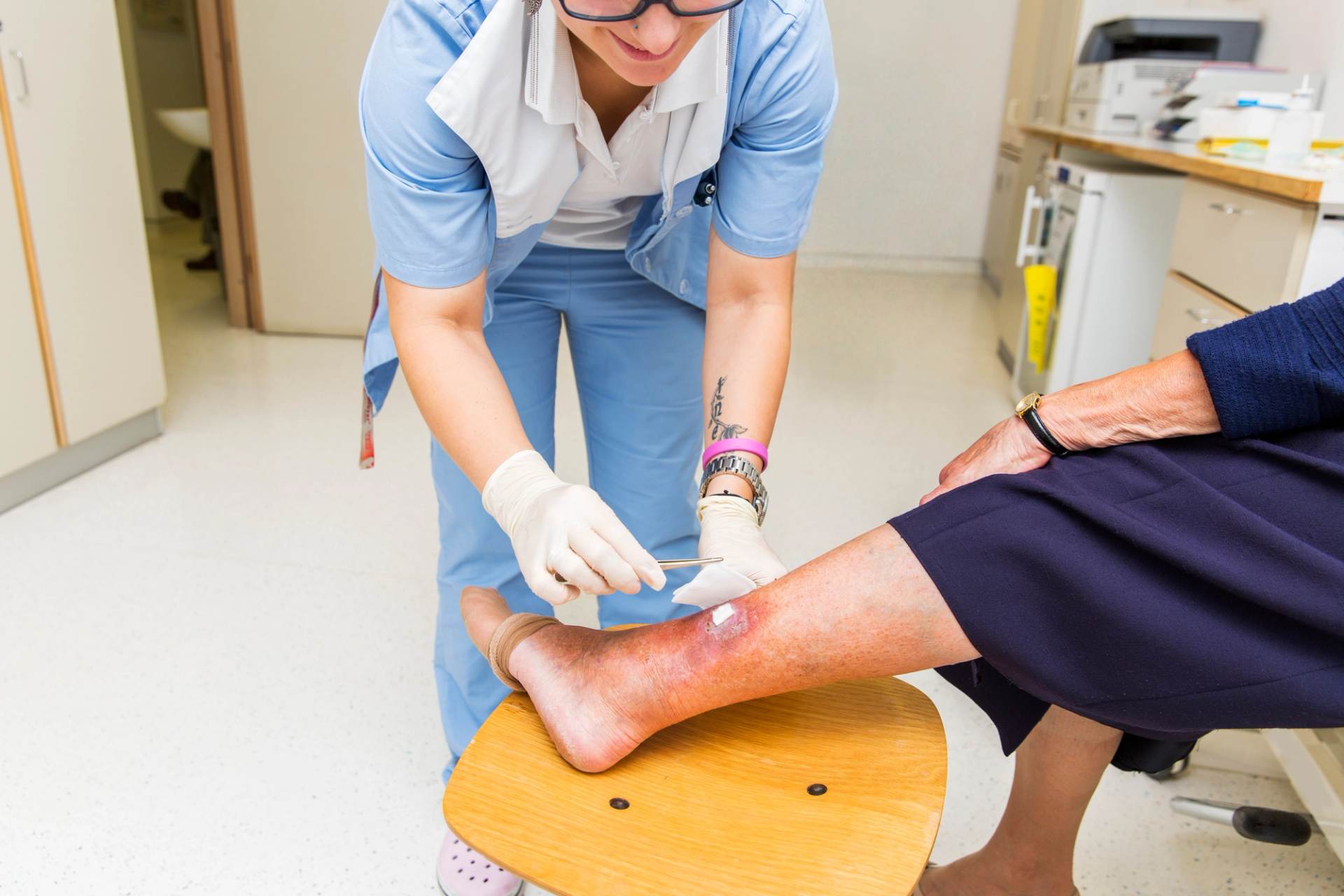
Tissue viability nursing in primary care: making a difference
Jeni Townsend, MSc, PG Dip, BN, Dip HE Primary Care Network Tissue Viability Specialist Nurse Pelton & Fellrose Medical Group, Chester-le-Street
Practice Nurse 2026;56(1):22-25
Wound care represents a significant burden to patients, general practice, and the general practice nurses charged with managing wounds in primary care, but much of this burden is preventable with better access to specialist skills
Wound care in the NHS remains a significant challenge, with chronic wounds estimated to affect 3.8 million adults in the UK and costing the health service approximately £8.3 billion annually.1 Much of this burden is preventable through timely intervention, continuity of care, and improved access to specialist expertise.
Traditionally, tissue viability services have been reactive, often engaging only when wounds become complex or chronic. The introduction of a Primary Care Network Tissue Viability Specialist Nurse (PCN TVN) role, funded through the Additional Roles Reimbursement Scheme (ARRS)2 offers a paradigm shift – embedding tissue viability expertise within primary care settings to deliver proactive, preventative, and person-centered wound management.The role came about after two local general practice nurses identified the need to reduce the impact of hard-to-heal wounds within their practices and on their patients. The role is extremely unusual, with only two similar posts in England. Many GP practices have withdrawn from providing wound care for complex/hard to heal wounds and in particular leg ulcer management, so a more proactive and preventative approach is required
This article reflects on the first year of the role’s implementation, exploring outcomes, innovations, including case studies illustrating the benefits of early intervention and support for non-healing wounds
SERVICE DEVELOPMENT AND ACTIVITY
Over its first 12 months, the PCN TVN service received 136 referrals across seven GP practices, generating approximately 140 face-to-face consultations and 88 remote contacts. Referral reasons included chronic venous ulcers, mixed aetiology wounds, pressure injuries, traumatic wounds, and chronic oedema.
A key initiative was the introduction of Compression Early Intervention Packs across all practices. These packs standardise the immediate provision of graduated compression in line with NICE guidance,3 allowing clinicians to act promptly when venous disease is suspected.
Early intervention with compression therapy has been shown to significantly reduce complications associated with chronic leg oedema. Evidence indicates that compression therapy lowers the risk of recurrent cellulitis and related hospital admissions by improving lymphatic drainage and reducing oedema.4 Additionally, the use of compression hosiery is effective in preventing recurrence of venous leg ulceration, a common consequence of chronic venous insufficiency.5 Furthermore, clinical guidelines support compression therapy as a cornerstone in managing lymphoedema, helping to prevent progression from subclinical stages to chronic disease.6
The PCN TVN role has close links with the local NHS trust’s tissue viability team ensuring that all patients and community nursing teams within the network have the appropriate support they need.
This initiative has enhanced responsiveness and improved continuity between practice and community teams.
DEVELOPING A PREVENTATIVE LOWER LIMB SERVICE
In recognition of the growing prevalence of lower limb conditions, a Lower Limb Early Intervention and Preventative Service was established within the PCN, focusing on non-cancer chronic oedema. Chronic oedema is a major risk factor for ulceration, infection, and reduced mobility, with incidence rising alongside obesity and sedentary lifestyles.7,8
The service receives referrals for non-cancer or non-heart failure (unless well-managed) -related lower limb oedema patients, offering comprehensive assessment, immediate compression, patient education, and ongoing monitoring. This proactive approach helps prevent wound recurrence and empowers patients to manage their conditions effectively, reducing demand on the health services. The effectiveness of this will be reported once a full audit has been carried out.
CASE STUDY 1: CHRONIC OEDEMA INTERVENTION IN PRACTICE
Anne* is a 57-year-old woman diagnosed with lymphoedema; poor engagement with specialist lymphoedema services. No compression therapy for 18 weeks. Single-layer short-stretch used for 9 weeks pre-review by PCN TVN (Sept 2024). Then double layer short-stretch bandaging used according to ankle circumference. Frequent wound infections and 8 courses of antibiotics. High appointment frequency: up to 3 times/week. Patient goal was to be able to wear her favorite footwear. Poor documentation, inconsistent coded entries.
Referred to PCN Tissue Viability Nurse (TVN) in December 2024
Care plan updated to two 2-layer short-stretch compression bandages, tailored to ankle circumference resulting in:
- Improved compression and patient engagement leading to better outcomes
- Appointment frequency reduced significantly
- Wound infections ceased; no further antibiotics required
By April 2025, patient transitioned to self-managed preventative care.
Cost Analysis before PCN TVN intervention
- Estimated nurse contacts: 91
- Nurse time cost (@£33/appointment): £3003.00
- Dressings and care cost: £2485.79
- Total cost: £5488.79
After PCN TVN Intervention
- PCN TVN contacts: 25
- PCN TVN time cost (@£33/appointment): £825.00
- Dressings and care cost: £1302.80
- Total cost: £2127.80
Overall savings after intervention: £3360.99
CASE STUDY 2: NON-HEALING SURGICAL WOUND
June* is a 51-year-old female with type 2 diabetes, chronic kidney disease (CKD) stage 3, and hypothyroidism; presented with a non-healing surgical wound post-hernia repair (2mm x 2mm x 30mm undermining). Despite 13 months of daily care using PHMB fluid, fibre-based dressing, and adhesive foam dressings, the wound failed to progress. Care included:
- 198 Practice Nurse appointments (20 mins each)
- 171 District Nurse visits (30 mins each)
Upon referral to a PCN TVN, an alginate gel was introduced with a silicone foam adhesive to cover. Dressing frequency was reduced from daily to alternate days, with supported self-care encouraged.
The patient received:
- 1 remote TVN review (30 mins)
- 3 face-to-face TVN reviews (40 mins each) Healing progress and cost efficiency were evaluated over 4 weeks
Within 1 week, cavity depth reduced by 5mm, and full healing was achieved by week 4. The patient completed most care independently. Cost analysis revealed:
Previous treatment (standard care)
- Practice nurse time: £2,168
- District nurse time: £3,481
- Consumables (fibre-based dressing, surfactant, foam dressings, antibiotics): £3,003
Total: £8,652
- New treatment (alginogel plus silicone foam dressing)
- TVN time (remote and face-to-face): £82.40
- Consumables (alginogel plus silicone foam): £27.96
Total: £110.36
CASE STUDY 3: DEHISCED LAPAROTOMY WOUND
Sarah* is a 79-year-old female with essential hypertension, atrial fibrillation (AF), osteoporosis, previous basal cell carcinoma (BCC) to nose. Underwent a laparotomy in April 2025 due to sigmoid colon cancer; presented with a dehisced laparotomy wound post sigmoid colon resection, wound on the lower abdomen above pubis synthesis. On referral to PCN TVN the wound had been present for 5 months and measured 3mmx 3mm x 7mm with no undermining. There was 100% granulation tissue and non-healing due to suspected biofilm and remaining collection (abscess). An ultrasound scan after 2 months showed a 2cm collection behind the wound line. Her goal was to be able to go swimming again.
Previous medical treatment/intervention; simple island dressing, Iodine based antimicrobial, silicone foam dressings, NOSF-TLC bordered dressing, one course of oral antibiotics.
Care included:
- 9 Practice Nurse appointments (20 minutes each) with intermittent self-care over 5 months
- 2 District Nurse visits (30 minutes each)
Upon referral to a PCN TVN, an alginate was introduced with a silicone foam adhesive to cover. Dressing frequency was reduced from weekly, to supported self-care.
The patient received:
2 face-to-face TVN reviews (40 minutes each) (initial assessment and final review on wound healing).
Wound progressed to healing after 4 weeks. Patient was able to go swimming again.
Cost analysis pre-PCN TVN intervention
- Practice nurse appointments: £297.00
- District nurse visits: £41.00
- Consumables: £105
Total £443.00
Post-PCN TVN intervention
Alginate plus silicone border @ £12.08
Total: £78.08
*Names have been changed to protect patient confidentiality
UPSKILLING AND COLLABORATION
Education and empowerment of primary care teams have been integral to the service’s success. Training sessions were delivered on wound assessment, manual Doppler technique, and compression application. Each practice received visual care pathways, clinical guidance, and direct support to embed best practice.
Feedback from clinicians indicates improved confidence in managing wounds and faster access to expert advice. The collaborative model has strengthened relationships across general practice and community nursing – enhancing patient experience and clinical outcomes.
LOOKING AHEAD: INNOVATION AND INTEGRATION
The next phase of development aims to consolidate and expand on these achievements. Planned innovations include off-script wound care and compression garment supply, digital wound assessment and documentation, and data-driven evaluation and research.
These ambitions align with NHS England’s Wound Care Strategy,9 and the Plan for Digital Health and Social Care,10 supporting a modern, evidence-based approach to tissue viability within primary care.
CONCLUSION
The first year of the PCN Tissue Viability Nurse role has demonstrated how embedding specialist expertise within primary care can transform wound care delivery. Through early intervention, preventative approaches, and collaborative upskilling, the service has improved outcomes, reduced delays, and built resilience within general practice teams.
As wound care continues to evolve, the PCN TVN role stands as a model of innovation, integration, and impact—driving forward the vision of proactive, person-centred care at the heart of the community.
KEY POINTS
- 140 referrals received in the first year across seven GP surgeries.
- Compression Early Intervention Packs implemented in all practices, improving timely access to treatment.
- Lower Limb Early Intervention Service established for non-cancer chronic oedema prevention.
- Case study evidence shows improved healing and patient empowerment through rapid intervention.
- Future plans include off-script supply models, digital wound care, and service evaluation research.
REFERENCES
- Guest JF, Ayoub N, et al. Health economic burden that wounds impose on the NHS in the UK. BMJ Open 2020;10(12):e045253.
- NHS England. Additional Roles Reimbursement Scheme (ARRS) Guidance; 2022. https://www.england.nhs.uk/publication/network-contract-directed-enhanced-service-additional-roles-reimbursement-scheme-guidance/
- NICE Clinical Knowledge Summaries. Venous leg ulcers; last revised 2025. https://cks.nice.org.uk/topics/leg-ulcer-venous/management/venous-leg-ulcers/
- Webb E, Neeman T, Bowden FJ, et al. Compression therapy to prevent recurrent cellulitis of the leg. N Engl J Med. 2020;383(7):630-639. doi:10.1056/NEJMoa1917197.
- Atkin L. Compression hosiery for the prevention of recurrent leg ulceration: Evidence, efficacy and best practice. Wounds UK. 2025. https://wounds-uk.com/journal-articles/compression-hosiery-for-the-prevention-of-recurrent-leg-ulceration-evidence-efficacy-and-best-practice/
- Wound Healing and Management Node Group. Evidence summary: Managing lymphoedema: compression therapy. Wound Practice and Research. 2024;24(4). https://journals.cambridgemedia.com.au/wpr/volume-24-number-4/evidence-summary-managing-lymphoedema-compression-therapy
- Moffatt C, Franks P, Doherty D. Chronic oedema: A prevalent health problem. Br J Community Nurs 2019;24(Suppl 12), S20–S26.
- The Legs Matter Partnership. Tackling Lower Limb Conditions in the Community; 2022. https://legsmatter.org/
- NHS. Health Innovation Network. National Wound Care Strategy Programme. https://thehealthinnovationnetwork.co.uk/our-programmes/wound-care/national-woundcare-strategy-programme/
- Department of Health and Social Care. A Plan for Digital Health and Social Care; 2022. https://www.gov.uk/government/publications/a-plan-for-digital-health-and-social-care/a-plan-for-digital-health-and-social-care
Related articles
View all Articles