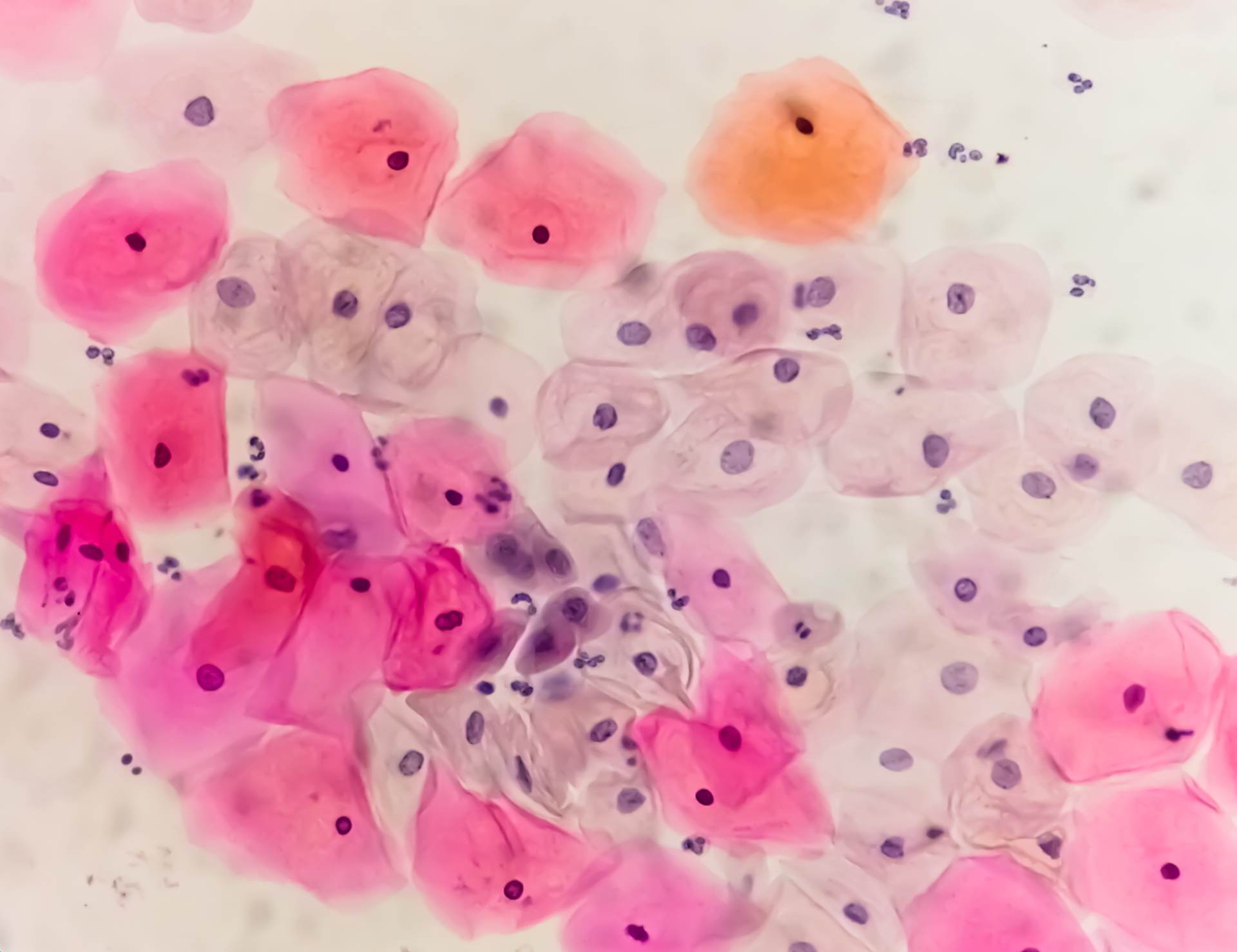
Cervical screening in England: HPV self-testing and changing guidance for patients living with HIV
Sarah Schneider, GPN, QN Senior Lecturer, Birmingham City University.
Practice Nurse 2026;56(6):22-26
Cervical screening in England has undergone significant changes but general practice nurses remain at the forefront of explaining screening invitations, discussing barriers to attendance, supporting people who have questions about HPV and ensuring appropriate follow-up
Learning objectives
After reading this article, readers should be able to:
- Explain the role of high-risk human papillomavirus (hrHPV) testing in cervical screening
- Describe the current NHS HPV self-testing pathway in England
- Explain the significance of a positive self-test and subsequent follow-up
- Summarise the 2026 changes to cervical screening for patients living with HIV
- Identify ways GPNs can support inclusive participation in screening
- Recognise when symptoms require clinical assessment rather than screening.
Cervical screening in England has undergone important changes. Primary high-risk human papillomavirus (hrHPV) testing is now established as the first stage of screening, and NHS HPV self-testing is being introduced for eligible women and people with a cervix who have not participated in screening when invited. At the same time, national guidance has changed for patients living with HIV. Patients with well-controlled HIV are no longer routinely invited for annual cervical screening and instead follow the national screening pathway applicable to people without HIV. A small group with poorly controlled HIV or significant immunosuppression may require additional annual clinician-collected screening through specialist HIV services.1-4
These developments are particularly relevant to GPNs. Primary care is an important setting for explaining screening invitations, discussing barriers to attendance, supporting people who have questions about HPV and ensuring appropriate follow-up.
This article focuses on England. Practitioners elsewhere in the UK should follow the screening programme applicable to their nation.
Primary HPV screening
Persistent infection with high-risk HPV is the principal cause of cervical cancer. The introduction of primary HPV screening reflects evidence that HPV-based screening provides greater protection against invasive cervical cancer than cytology-based screening alone.5,6
In primary HPV screening, the hrHPV test is performed first. Where hrHPV is detected, cytology is used to assess cervical cells and determine the appropriate next step. Where hrHPV is not detected, the individual generally returns to routine recall, subject to the specific screening pathway.1,7
The distinction between screening and diagnosis is important. A positive HPV result does not mean that a person has cervical cancer. It indicates that high-risk HPV has been detected and that further assessment may be required.
Screening is also different from investigation of symptoms. Unexplained vaginal bleeding, postcoital bleeding, abnormal vaginal discharge or other concerning symptoms require appropriate clinical assessment and should not simply be attributed to a screening result.
HPV self-testing
The NHS self-testing programme aims to increase participation by removing some practical and psychological barriers associated with clinician-collected screening. Current NHS guidance states that self-testing is offered to eligible women and people with a cervix who have not participated in cervical screening when invited. Eligible individuals are identified through the call-and-recall system.1,2
Self-testing should not be described as a universal replacement for clinician-collected cervical screening. It is currently a targeted pathway for under-screened individuals. People who are not eligible for the self-testing offer continue to follow the standard clinician-collected primary HPV screening pathway.1,2
Self-testing involves the individual collecting their own vaginal sample, which is returned for hrHPV testing. The NHS programme uses specified kits and laboratory pathways. Privately purchased HPV tests should therefore not be presented as equivalent to NHS cervical screening.1
Evidence for self-testing
There is substantial evidence that HPV self-sampling can increase cervical screening participation, particularly among people who have previously not attended. A systematic review and meta-analysis found that offering HPV self-sampling increased participation compared with standard invitation strategies.8
Accuracy depends on the HPV assay and sampling device. An updated meta-analysis found that relative accuracy varied according to the testing method, with some PCR-based HPV assays showing performance closer to clinician-collected samples.9 This supports careful use of validated self-sampling systems rather than assuming that all commercially available HPV tests are equivalent.
Evidence from England is particularly relevant. The YouScreen study evaluated self-sampling among people overdue for cervical screening and demonstrated increased participation following implementation in primary care.10
More recent evidence has examined workflows relevant to the English programme. The HPValidate study compared different combinations of self-sampling devices and HPV assays. Four of the five workflows examined had relative sensitivity for CIN2+ that was relatively close to clinician-collected sampling, although performance varied between combinations.11
The method used to offer self-testing also matters. An updated meta-analysis found that different strategies for distributing self-sampling kits can influence participation.12 Self-testing therefore needs to be accompanied by clear communication, accessible information and effective follow-up arrangements.
TABLE 1. CLINICIAN-COLLECTED SCREENING AND HPV SELF-TESTING | ||
Feature | Clinician-collected sample | HPV self-testing |
Sample collected by: | Trained healthcare professional | Individual |
Sample type: | Cervical | Vaginal |
hrHPV testing | Yes | Yes |
Cytology from initial sample: | Yes | No |
Current NHS role | Routine primary screening | Targeted pathway for eligible under-screened people |
If hrHPV detected | Cytology performed according to pathway | Clinician-collected cervical sample required |
Explaining a positive self-test
A key message for GPNs is that a self-test is an HPV test rather than a cytology test.
If hrHPV is detected on a self-collected sample, the individual does not proceed directly from self-testing to cytology. Under the current NHS pathway, the person is asked to attend for a clinician-collected cervical sample. The hrHPV test is repeated on this sample and, if hrHPV remains positive, cytology is performed.2,3
A positive self-test therefore identifies a person who requires further assessment; it does not diagnose cervical disease.
Communication should avoid unnecessarily alarming language. HPV is common, and detection does not establish when infection was acquired. A positive result should not be interpreted as evidence of recent sexual activity or infidelity.
Research examining communication about self- and clinician-sampling indicates that people want clear information about the differences between the tests, what results mean and what will happen afterwards.13 GPNs can therefore help patients understand that self-testing is part of a screening pathway rather than a standalone diagnostic procedure.
Supporting people who use self-testing
Self-testing may be particularly acceptable to people who experience barriers to conventional cervical screening. These can include anxiety about intimate examinations, previous traumatic experiences, concerns about privacy, disability-related barriers, difficulties attending appointments and cultural or communication barriers.
However, nurses should avoid making assumptions about why an individual has not attended. An open question such as ‘Is there anything that has made cervical screening difficult for you?’ can help identify appropriate support.
Research involving ethnically diverse groups in northwest England found that self-sampling was viewed positively by participants, with privacy, comfort and greater control identified as potential advantages, although concerns about accuracy and practical use remained.15
Reasonable adjustments should be considered for people who require additional support. NHS guidance also allows appropriate assistance with self-testing while maintaining privacy and autonomy.1
Self-testing should not, however, be used to manage symptoms. Someone with concerning symptoms requires clinical assessment irrespective of whether they have recently completed an HPV test.
Practice point
Self-testing should be presented as another route into an organised screening programme, not as a replacement for clinical care.
Patients living with HIV: the 2026 change
TABLE 2. CERVICAL SCREENING AND HIV: CURRENT POSITION IN ENGLAND | |
Clinical situation | Current approach |
WEll-controlled HIV | Follow routine national cervical screening programme |
Poorly controlled HIV or significant immunosuppression | Additional annual screening may be considered by managing HIV clinician |
Enhanced pathway and hrHPV negative | Annual clinician-collected sample may be requested |
Enhanced pathway | Specialist HIV clinic with prior laboratory agreement |
Responsibility for enhanced screening | Managing/requesting HIV clinician |
Routine NHS self-testing | Apply standard eligibility criteria; do not use it to replace a required enhanced specialist pathway |
The guidance for patients living with HIV has changed substantially in England.
Patients living with HIV have historically been offered more frequent cervical screening because HIV-associated immunosuppression is associated with increased HPV persistence and cervical disease. Evidence also indicates that antiretroviral therapy is associated with reductions in hrHPV prevalence and cervical intraepithelial neoplasia.14
More recent evidence continues to demonstrate a higher burden of cervical precancer and cancer among women living with HIV internationally, although the magnitude of risk and the applicability of individual studies vary between populations.16 This background risk remains important when interpreting the new pathway.
The current NHS guidance states that patients living with well-controlled HIV are no longer invited annually for routine cervical screening. They are managed according to the national cervical screening programme applicable to people who are not living with HIV.1
This change is reflected in the September 2026 BHIVA update, which states that patients living with well-controlled HIV should follow the national screening programme.4
For primary care, HIV status alone should therefore no longer automatically trigger annual cervical screening.
There is, however, an enhanced pathway for a small group.
Patients living with HIV whose infection is not well controlled, for example because of ongoing or recurrent viraemia, poor adherence to antiretroviral treatment, persistently low CD4 counts below 200 cells/mm³ or other clinically significant immunosuppression, may be considered for additional annual screening.1,4
Where such an individual is hrHPV negative, an annual clinician-taken cervical screening sample may be requested by the managing HIV clinician. This enhanced pathway is outside routine NHS cervical screening call and recall. It should be initiated by the clinician managing the individual's HIV, undertaken through a specialist HIV clinic and agreed with the cervical screening laboratory on a test-by-test basis before sampling. Responsibility for patient selection, requesting the annual screen and checking the recall interval rests with the requesting clinician.1,4
The NHS programme anticipates that very few patients living with HIV will require this additional annual pathway.1
For patients who have previously attended annually, this change may initially be confusing. A patient may reasonably ask why a test that was previously performed every year is no longer required at that frequency.
The appropriate explanation is that national guidance has changed in response to current evidence and programme policy. People with well-controlled HIV are now managed within the routine screening programme, while additional screening is reserved for patients whose clinical circumstances indicate a need for enhanced surveillance.1,4
Evidence concerning treatment and disease risk is also relevant. A systematic review by Kelly et al found associations between antiretroviral therapy and reductions in several HPV-related outcomes, although the evidence does not mean that HIV treatment eliminates cervical disease risk.14 The 2026 international meta-analysis by Dalal and colleagues further demonstrates why continued attention to cervical screening remains important for patients living with HIV.16
Health inequalities and inclusive care
Cervical screening participation is influenced by socioeconomic circumstances, disability, ethnicity, previous experiences of healthcare, communication needs and practical access to appointments.10,12
Self-testing may reduce some barriers but will not address all of them. People may still need help understanding an invitation, ordering or returning a kit, interpreting their result or accessing follow-up.
Research into attitudes towards self-sampling suggests that many people value having greater control over the screening process, although preferences differ and some people continue to value clinician involvement.18
The communication strategy surrounding self-testing is therefore important – there is a need for clear information that supports informed decision-making about self- and clinician-sampling.13
Inclusive language is also important. Cervical screening is relevant to women and other people with a cervix, and healthcare professionals should use terminology that respects individual identity and preference.
Confidentiality requires particular attention when discussing patients living with HIV. HIV status should only be shared where clinically necessary, and discussions about screening should take place in an appropriate private environment.
Putting the guidance into practice
The introduction of self-testing does not mean that every patient who asks about cervical screening should be offered a kit. GPNs should first establish whether the individual has received an NHS self-testing invitation and whether they are following a routine or enhanced pathway. Current NHS guidance states that people cannot simply opt into the self-testing pathway or request a kit unless they have been invited.1,7
Nurses should also consider what happens after a self-test. A person who receives a positive result needs practical support to arrange the clinician-collected sample. Someone who has difficulties with communication, mobility, digital access or attending appointments may require reasonable adjustments. NHS guidance specifically highlights the need to consider such barriers when follow-up is required.1
This is particularly important because self-testing can identify people who have previously had little contact with screening services. The opportunity to engage someone in screening should therefore be accompanied by an appropriate plan for follow-up.
What GPNs need to do
GPNs can support implementation by ensuring that patients receive consistent and accurate information.
The nurse's role is not simply to explain how to use a kit. It is to support informed participation, identify barriers, correct misconceptions and ensure that patients understand the pathway following a result.
The organisation of the NHS screening programme is also important. Current NHS pathway guidance includes specific processes for invitations, HPV testing, cytology, colposcopy and self-testing, while failsafe arrangements are intended to reduce the risk of patients being lost during follow-up.3,17
TABLE 3. GPNs CHECKLIST | |
Check | Practical action |
Eligibility | Establish whether the individual is eligible for NHS self-testing |
Understanding | Explain that self-testing detects hrHPV |
Positive result | Explain that clinician-collected follow-up is required |
Symptoms | Arrange clinical assessment rather than relying on screening |
Accessibility | Offer reasonable adjustments |
Previous non-attendance | Explore barriers without making assumptions |
HIV | Check whether the patient is on the routine or enhanced pathway |
Confidentiality | Discuss HIV and screening privately |
Follow-up | Ensure patients understand the next step after a positive result |
Documentation | Follow local and national screening procedures |
Conclusion
The introduction of HPV self-testing is an important development in the NHS Cervical Screening Programme in England. It provides an additional route into screening for eligible under-screened women and people with a cervix and has the potential to address some barriers associated with conventional attendance. Evidence demonstrates that self-sampling can increase participation and that validated self-sampling approaches can provide effective HPV detection.8-12,19
However, self-testing does not remove the need for healthcare professionals. A positive self-test requires clinician-collected follow-up, while patients with symptoms require clinical assessment irrespective of their screening status.2,3
The 2026 change for patients living with HIV is equally important. Patients with well-controlled HIV should now follow the routine national cervical screening programme. Additional annual clinician-collected screening may be considered for a small group with poorly controlled HIV or significant immunosuppression, under the direction of the managing HIV clinician.1,4
The wider principle remains consistent with international cervical cancer prevention guidance: effective screening depends on appropriate testing, reliable follow-up and treatment of disease identified through the pathway.20
For GPNs, understanding these changes is therefore essential. Clear communication, appropriate follow-up, confidentiality and an individualised approach can help ensure that the benefits of the changing screening programme reach the people who are least likely to participate.
Key points
- Primary hrHPV testing is the basis of cervical screening in England.
- NHS HPV self-testing is currently targeted at eligible under-screened women and people with a cervix.
- A positive self-test requires clinician-collected follow-up.
- Self-testing is not a diagnostic test for symptoms.
Reflection points |
|
References
- NHS England. NHS Cervical Screening Programme: good practice guidance for sample takers; 2026 [updated 25 Aug 2026]. https://www.gov.uk/government/publications/nhs-cervical-screening-programme-good-practice-guidance-for-sample-takers/nhs-cervical-screening-programme-good-practice-guidance-for-sample-takers
- NHS England. Topic 9: hrHPV self-testing; 2026 [updated 2 Sep 2026]. https://www.gov.uk/government/publications/nhs-cervical-screening-cervical-sample-taker-training/topic-9-hrhpv-self-testing
- NHS England. Cervical screening care pathway; 2026 [updated 25 Aug 2026]. https://www.gov.uk/government/publications/cervical-screening-care-pathway/cervical-screening-care-pathway
- British HIV Association. Updated cervical screening recommendations for people living with HIV; 2026 [8 Sep 2026]. https://bhiva.org/updated-cervical-screening-recommendations-for-people-living-with-hiv/
- Ronco G, Dillner J, Elfström KM, et al. Efficacy of HPV-based screening for prevention of invasive cervical cancer: follow-up of four European randomised controlled trials. Lancet 2014;383(9916):524-32.
- Kitchener HC, Canfell K, Gilham C, et al. The clinical effectiveness and cost-effectiveness of primary human papillomavirus cervical screening in England: extended follow-up of the ARTISTIC randomised trial cohort through three screening rounds. Health Technol Assess 2014;18(23):1-196.
- NHS England. Cervical screening pathway requirements; 2026 [updated 25 Aug 2026]. https://www.gov.uk/government/publications/cervical-screening-care-pathway/cervical-screening-care-pathway
- Yeh PT, Kennedy CE, de Vuyst H, Narasimhan M. Self-sampling for human papillomavirus (HPV) testing: a systematic review and meta-analysis. BMJ Glob Health 2019;4(3):e001351.
- Arbyn M, Smith SB, Temin S, et al. Detecting cervical precancer and reaching underscreened women by using HPV testing on self samples: updated meta-analyses. BMJ 2018;363:k4823.
- Lim AWW, Deats K, Gambell J, et al. Opportunistic offering of self-sampling to non-attenders within the English cervical screening programme: a pragmatic, multicentre, implementation feasibility trial with randomly allocated cluster intervention start dates (YouScreen). EClinicalMedicine. 2024;73:102672.
- Mathews CS, Sargent A, Cuschieri K, et al. HPValidate-human papillomavirus testing with DNA and mRNA assays on self-collected samples in cervical screening: comparison of test characteristics on three self-sampling devices. Br J Cancer 2025;133(5):665-73.
- Costa S, Verberckmoes B, Castle PE, Arbyn M. Offering HPV self-sampling kits: an updated meta-analysis of the effectiveness of strategies to increase participation in cervical cancer screening. Br J Cancer 2023;128:805-13.
- Williams D, Clarke E, Lifford KJ, et al. Recommendations for a communication strategy to support informed decision-making about self or clinician sampling for cervical screening in the UK: qualitative study. Health Expect 2025;28(2):e70191.
- Kelly H, Weiss HA, Benavente Y, et al. ART and HPV Review Group. Association of antiretroviral therapy with high-risk human papillomavirus, cervical intraepithelial neoplasia, and invasive cervical cancer in women living with HIV: a systematic review and meta-analysis. Lancet HIV 2018;5(1):e45-58.
- Whitley S, Hawkins RL, Davies JC, et al. Acceptability of self-sampling for cervical screening in ethnically diverse groups in Northwest England: a focus group study. Health Expect 2025;28(4):e70338.
- Dalal S, Sundström K, Silva R, et al. Age-specific distribution of cervical precancer and cancer among women living with HIV across seven countries: a systematic review and an individual patient data meta-analysis. Lancet HIV 2026;13(2):e126-37.
- NHS England. Cervical screening: cytology reporting failsafe (primary HPV); 2026 [updated 25 Aug 2026]. https://www.gov.uk/government/publications/cervical-screening-cytology-reporting-failsafe
- Marlow L, Drysdale H, Waller J. Attitudes towards being offered a choice of self-sampling or clinician sampling for cervical screening: a cross-sectional survey of women taking part in a clinical validation of HPV self-collection devices. J Med Screen 2025;32(2):93-9.
- Arbyn M, Verdoodt F, Snijders PJF, et al. Accuracy of human papillomavirus testing on self-collected versus clinician-collected samples: a meta-analysis. Lancet Oncol 2014;15(2):172-83.
- World Health Organization. WHO guideline for screening and treatment of cervical pre-cancer lesions for cervical cancer prevention; 2021. https://www.who.int/publications/i/item/9789240030824
Related articles
View all Articles