Recognising travel-related illness in returning travellers
Yvonne Gibney, RGN, FFTM RCPS(Glasg). Travel Health Nurse Specialist, Module lead, PGDip Faculty of Travel Medicine, RCPS(Glasg)
Practice Nurse 2026;56(4):20-24
Travel overseas is routine for many patients, whether for holidays, visiting friends and relatives, work, cruises, volunteering, or longer stays abroad. As a result, returning travellers frequently present with symptoms ranging from mild, self-limiting illness to features of more serious infection.
Returning travellers who are unwell often consult general practice nurses, particularly given their key role in travel health in primary care. Awareness of travel-related illness can support assessment and help inform when further review or escalation may be appropriate.
Pre-travel risk assessment and post-travel recognition are closely linked. Understanding how travel-associated infections may present on return supports more effective pre-travel advice and enables travellers to better recognise symptoms and seek medical attention appropriately, both while overseas and after return
Fever in the returning traveller
Fever in a returning traveller should always prompt careful assessment. International guidance highlights that fever following travel may be associated with a wide range of infections, some of which can be serious or potentially life-threatening. Malaria remains a key diagnostic consideration in any traveller returning from an endemic area, alongside infections such as dengue, chikungunya, and Zika virus infection depending on geographical exposure.1,2
A detailed travel history is essential and should include destinations visited, timing of travel and return, accommodation type, insect exposure, food and water intake, freshwater contact, animal exposure, and activities undertaken while abroad. Assessment should also consider associated symptoms such as rash, headache, gastrointestinal symptoms, respiratory features, or haematuria.
Climate change and changing travel related disease patterns
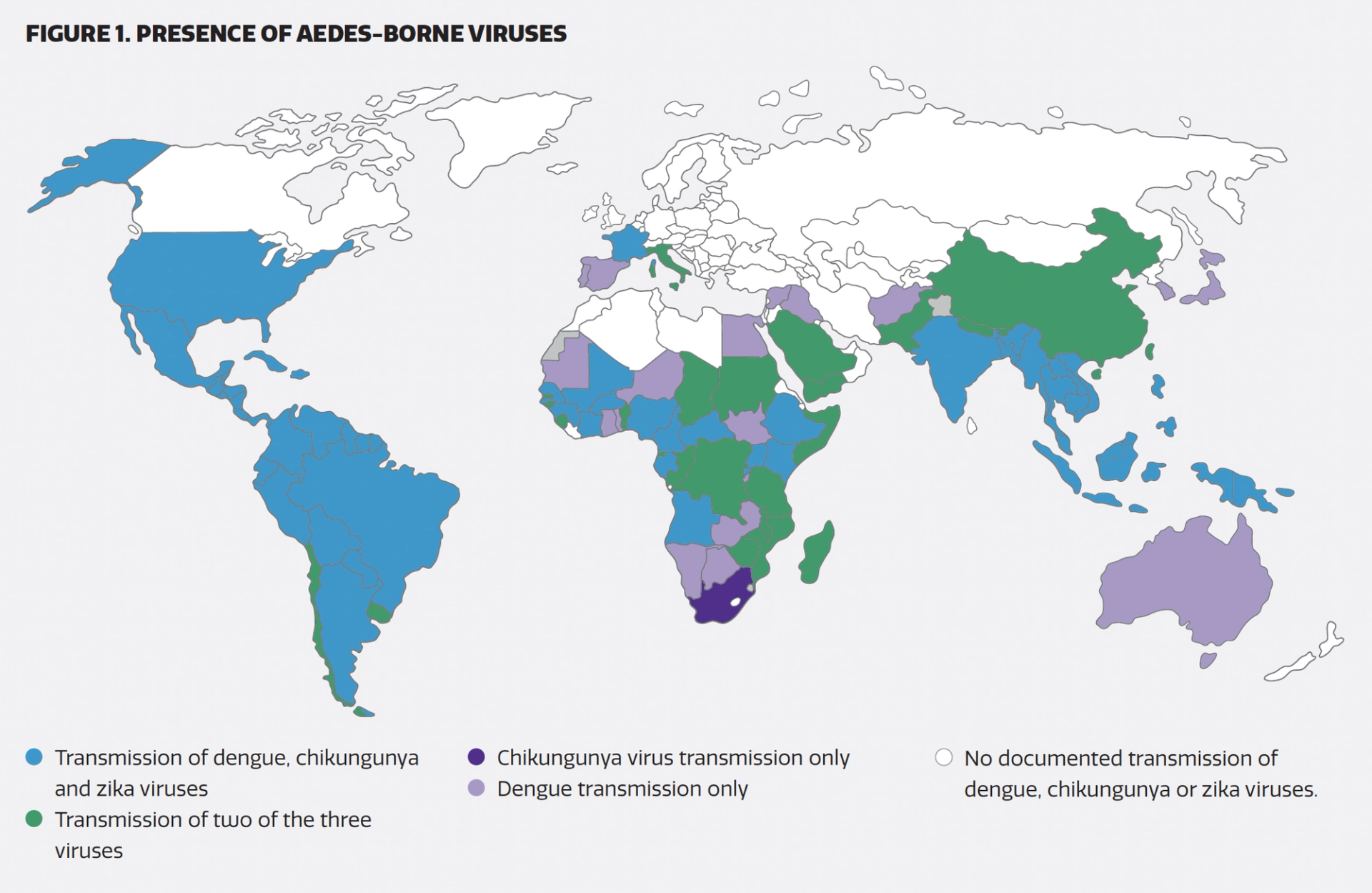
Climate change, urbanisation, and increasing global travel are contributing to the expansion of mosquito habitats and changing patterns of vector-borne disease transmission. This is reflected in the growing number of locally acquired cases of dengue reported in parts of Europe, including Spain, Italy, and France, which consistently remain among the most popular destinations for UK travellers.3,4 Similar locally acquired cases and clusters of chikungunya have also been reported in France and Italy.5 These changing epidemiological patterns reinforce the importance of considering travel-associated infections even following travel to destinations not traditionally associated with tropical disease risk.
Malaria: red flags and urgent action
Malaria should be considered in any traveller presenting with fever who has visited a malaria-endemic region, regardless of whether prophylaxis was taken. Symptoms may initially be non-specific and include fever, chills, headache, malaise, and gastrointestinal symptoms.
Prompt referral for same-day assessment in hospital is essential, as diagnostic testing requires timely laboratory processing. Delays in transport or analysis of blood samples may affect diagnostic accuracy. Malaria can progress rapidly and may become severe if not identified and treated promptly.
Pregnant women are at increased risk of severe malaria and adverse maternal and foetal outcomes, and a lower threshold for urgent assessment is appropriate.
Pre-travel consultation provides an opportunity to discuss malaria risk, including bite prevention, chemoprophylaxis where indicated, and when to seek urgent medical attention.6
Rash and fever-associated infections
Skin and rash presentations are an important consideration in returning travellers and may be associated with systemic infection. Careful history is essential, including timing of onset, travel destination, environmental exposures, and associated symptoms.1
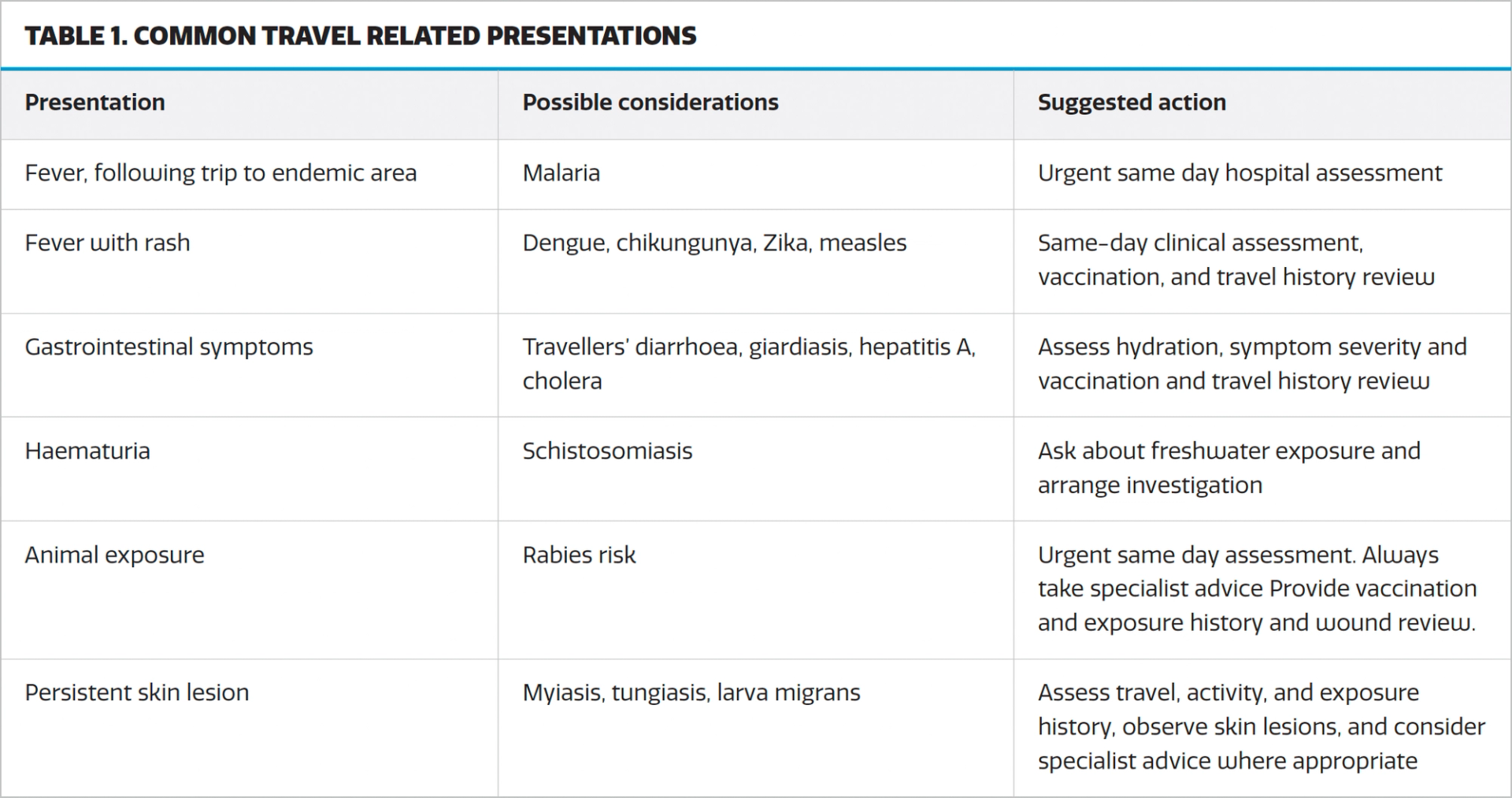
A rash with fever should prompt consideration of infections such as dengue, chikungunya, Zika virus infection, and measles (Table 1)
Dengue
Dengue typically presents with fever, rash, and severe headache, often accompanied by characteristic retro-orbital pain, myalgia, and malaise.² Retro-orbital pain is a particularly important clinical feature and may help differentiate dengue from other febrile travel-associated infections. The rash may appear as the fever begins to resolve, although this phase still requires careful assessment due to the potential for complications.
Chikungunya
Chikungunya may present similarly with fever and rash but is more strongly associated with significant arthralgia, which can be marked and, in some individuals, prolonged for months or occasionally years beyond the acute phase of illness.² In some cases, persistent joint symptoms may represent a delayed presentation where the initial travel-associated infection was not recognised at the time of acute illness.
Zika virus infection
Zika virus infection is often asymptomatic, but when symptoms occur, they may include rash, fever, conjunctivitis, myalgia, arthralgia, malaise, and headache.7 Where pregnancy is confirmed or possible, suspected travel-associated infection requires urgent medical and obstetric assessment.
Dengue, chikungunya and Zika infections are transmitted by Aedes mosquitoes, which bite from dawn to dusk and possibly into the evening in well-lit areas. Although a history of insect bites may support clinical suspicion, absence of a reported bite does not exclude exposure, as reactions vary between individuals.
Many of the presenting symptoms of dengue, chikungunya, Zika virus infection, and malaria may overlap, particularly during the initial stages of illness, with travellers presenting with combinations of fever, headache, myalgia, malaise, rash, or gastrointestinal symptoms. Co-infection can also occur, particularly in areas where multiple mosquito-borne infections circulate simultaneously, and this should be considered where clinical presentation appears atypical or unusually severe.
Insect bite avoidance
Robust insect bite avoidance advice remains a key component of pre-travel assessment for travellers visiting areas with vector-borne disease risk.
This includes discussion around the use of effective repellents, appropriate clothing, insecticide-treated accommodation measures where relevant, and awareness that mosquito exposure may occur during both daytime and night-time hours depending on the species involved.8
Reinforcing these measures is particularly important given the increasing geographical spread of vector-borne diseases. Signposting travellers to reputable, evidence-based resources, such as the National Travel Health Network and Centre (NaTHNaC), can further support access to up-to-date travel health information before departure.9 Travellers increasingly obtain health information through social media, online forums, and informal digital sources, where advice may not always be evidence-based, accurate, or up to date.
Access to reliable, evidence-based travel health information can support informed decision-making and a greater sense of personal responsibility while overseas.
Measles
It is also important to consider more familiar infections such as measles, particularly in the context of ongoing international outbreaks. Measles may present with fever and a maculopapular rash, often accompanied by respiratory symptoms such as cough or coryza.10 Vaccination history should be explored, as unvaccinated or incompletely vaccinated travellers may be at increased risk. Disruptions to routine immunisation programmes, including those seen during the COVID-19 pandemic, as well as reduced access to healthcare in settings affected by conflict or instability, may contribute to gaps in vaccination coverage. Ensuring travellers are up to date with routine and childhood vaccinations therefore remains a vital component of pre-travel risk assessment.
Routine and seasonal vaccination considerations
Pre-travel assessment should also include consideration of seasonal and routine vaccinations, such as influenza and pneumococcal vaccination where appropriate. This is particularly relevant for cruise travellers, who may be exposed to large international populations in relatively confined settings. Travellers may also encounter circulating infections outside normal UK seasonal patterns, and crew members may originate from regions with differing infection patterns.
Cruise travel is also evolving demographically, with increasing numbers of younger travellers, including those aged 18–34 years, now choosing cruise holidays.11 While older adults and those with underlying health conditions remain an important group in the context of cruise travel, practice nurses should be aware that cruise-associated health risks are no longer limited to older travellers. The combination of large international passenger groups, shared environments, close social interaction, and varying destinations may increase exposure to respiratory and gastrointestinal infections across all age groups. This reinforces the importance of considering vaccination status, infection prevention advice, food safety, and general travel health education for cruise travellers more broadly.
Gastrointestinal illness
Gastrointestinal symptoms are among the most common presentations in returning travellers. Most cases are mild and self-limiting, but a broad differential diagnosis should be considered.
Common causes include bacterial, viral, and parasitic infections. Parasitic infections such as giardiasis may present with prolonged diarrhoea, bloating, abdominal discomfort, and weight loss. Systemic infections such as typhoid fever and hepatitis A may present with fever and gastrointestinal symptoms.1.2
Typhoid fever should be considered where there is a combination of persistent fever and gastrointestinal symptoms following travel to endemic regions, particularly where there have been higher-risk food or water exposure, or prolonged stays.
Cholera, although less commonly encountered in UK travellers, may present with profuse watery diarrhoea and rapid dehydration. Prevention through vaccination in selected higher-risk travellers, alongside careful food and water hygiene, remains important.2
Assessment should include duration and severity of symptoms, stool characteristics, fever pattern, abdominal pain, hydration status, and any associated systemic symptoms.
Pre-travel advice remains important in reducing gastrointestinal risk, particularly regarding food and water hygiene, hand hygiene, and safe eating practices. Vaccination against hepatitis A and typhoid also forms an important part of routine travel prevention in appropriate travellers.
Parasitic skin infections
Some dermatological presentations are linked to environmental exposures during travel. Scabies should also be considered in returning travellers presenting with an intensely itchy rash, particularly where itching worsens at night or where there has been close skin-to-skin contact in crowded settings or shared accommodation. Although not exclusive to travel, scabies may spread easily in group travel environments, hostels, volunteer settings, cruises, or areas where overcrowding and limited access to hygiene facilities occur.12
Cutaneous larva migrans may present as an intensely itchy, creeping rash, often described as a “spaghetti-like” line moving under the skin, associated with contact with contaminated sand or soil, particularly in beach settings.1
Tungiasis, caused by the sand flea and sometimes referred to as jiggers, typically affects the feet and may present as small nodular lesions with a central black dot. It is associated with walking barefoot in affected areas.13
Myiasis, caused by fly larvae such as the tumbu fly or botfly, may present as a painful or uncomfortable boil-like lesion, sometimes with a central punctum and a sensation of movement within the skin.1.
These conditions highlight the importance of detailed exposure history and reinforce the value of pre-travel advice regarding environmental and skin-related risks associated with destination and planned activities.
Sexual health considerations
Travel may also be associated with increased sexual health risk behaviours, irrespective of age, particularly in settings involving alcohol, new relationships, festivals, cruises, backpacking, longer-term travel, or sex tourism.
Returning travellers may present with symptoms suggestive of sexually transmitted infections, blood-borne viruses, or other infections acquired during travel. In some cases, infections may remain asymptomatic for a period following return. Practice nurses should remain aware that sexual health risks are not limited to younger travellers, particularly given increasing awareness of HIV infection and other sexually transmitted infections in older adults.14
Travel-associated blood-borne virus risk is not limited to sexual exposure. Tattooing, body piercing, cosmetic procedures, or informal or emergency medical treatment undertaken overseas may also increase the risk of infections such as hepatitis B where infection prevention standards may differ from those in the UK.15
Pre-travel consultation provides an opportunity to discuss safer sexual practices, condom use, and the importance of seeking appropriate medical advice following potential exposure. Including sexual health as part of holistic travel health advice can support informed decision-making and risk-reduction behaviours while overseas.
Rabies exposure
Rabies risk should always be considered following animal exposure. Transmission is not limited to bites; scratches or contact of saliva with broken skin or mucous membranes may also pose a risk.
Travellers may not always recognise the significance of these exposures, and failure to seek timely post-exposure prophylaxis can have serious consequences. Enquiring specifically about animal contact during travel is therefore important. UKHSA guidance for healthcare professionals provides practical advice regarding risk assessment and management following potential rabies exposure which includes access to rabies immunoglobulin (RIG) and post exposure rabies vaccinations, if required, through the designated specialist services16
Pre-travel advice should include discussion around avoiding animal contact and the need for urgent medical attention following any potential exposure.
Schistosomiasis
Schistosomiasis should be considered in travellers reporting freshwater exposure in endemic regions, particularly in parts of Africa. Infection occurs through skin contact with contaminated freshwater.
Although an initial skin reaction, (swimmers itch) may occur shortly after exposure, more clinically significant presentations may arise weeks or months later. Haematuria is an important feature and may be mistaken for a urinary tract infection if a travel history is not considered.17
This highlights the importance of asking about recent travel and freshwater exposure when assessing patients with unexplained urinary symptoms or haematuria. Pre-travel consultation provides an opportunity to advise travellers to avoid freshwater exposure in endemic areas and to seek medical review on return if exposure has occurred.
Delayed presentation
Symptoms of travel-related illness do not always occur immediately following return to the UK. Some infections, including malaria and schistosomiasis, may present weeks or even months after travel, and travellers may not always volunteer older travel history unless specifically asked.1 Maintaining awareness of previous travel therefore remains important when assessing unexplained fever, haematuria, gastrointestinal symptoms, or persistent skin conditions, even where travel did not occur recently. This reinforces the importance of routinely enquiring about previous travel when assessing unexplained illness in primary care.
High-risk groups in returning travellers
Certain groups may be at increased risk of more severe or complicated travel-related illness and should prompt a lower threshold for assessment and escalation. These include pregnant travellers, young children, immunocompromised individuals, and travellers visiting friends and relatives in higher-risk regions.
VFR travellers
Travellers visiting friends and relatives (VFR travellers) may be at increased risk of travel-related illness for a variety of reasons, including longer stays, closer contact with local communities, differing accommodation standards, and lower uptake of pre-travel advice. In some cases, travellers may perceive themselves to be at lower risk because they are returning to familiar environments, despite ongoing exposure to infectious disease risks. These travellers may also be less likely to access travel health services before departure, reducing opportunities for vaccination, malaria prevention advice, and broader risk-reduction discussions. Consider asking migrant patients opportunistically about future travel plans to visit friends and relatives, and remind them of the importance of seeking pre-travel advice 6 – 8 weeks before departure.18
When to escalate or refer
While many travel-related illnesses are self-limiting, certain presentations should prompt urgent assessment or escalation. These include fever following travel to malaria-endemic areas, fever with rash, significant dehydration, haematuria following freshwater exposure, or any signs of systemic deterioration.
Prompt referral or discussion with specialist services may be appropriate in line with local pathways. Awareness of these features can support timely clinical decision-making and reduce the risk of delayed diagnosis.
Some travel-associated infections may also have public health implications and require management in line with UK guidance and local protocols. While statutory notification is not usually the responsibility of practice nurses, awareness of these pathways can support appropriate communication and continuity of care.
Conclusion
Travel-related illness is an increasingly relevant consideration in primary care. While many presentations are self-limiting, some infections may be serious and require immediate escalation.
A structured approach to assessing returning travellers, supported by awareness of common symptom patterns and risk factors, can help guide clinical decision-making. Equally, effective pre-travel risk assessment and patient education play a significant role in reducing risk and supporting travellers to recognise when medical attention may be required during travel or after return.
Supporting travellers to make informed decisions and adopt practical risk-reduction behaviours while overseas remains an important part of promoting safer and healthier travel.
References
- Centres for Disease Control and Prevention (CDC). Post-travel evaluation and dermatologic conditions. In: Brunette GW, Nemhauser JB, editors. CDC Yellow Book 2026: Health information for international travel; 2025. https://www.cdc.gov/yellow-book/hcp/contents/index.html
- UK Health Security Agency (UKHSA). Guidance on travel-associated infections and clinical assessment; 2023. https://www.gov.uk/government/organisations/uk-health-security-agency
- Office for National Statistics (ONS). Travel trends: 2024; 2025 https://www.ons.gov.uk/peoplepopulationandcommunity/leisureandtourism/articles/traveltrends/2024
- European Centre for Disease Prevention and Control (ECDC). Seasonal surveillance of dengue in the EU/EEA; 2025. https://www.ecdc.europa.eu/en/dengue-monthly
- European Centre for Disease Prevention and Control (ECDC). Historical data on local transmission in the EU/EEA of chikungunya virus disease; 2025. https://www.ecdc.europa.eu/en/chikungunya-virus-disease/surveillance-and-disease-data/autochthonous-transmission-chikungunya-virus-disease
- UK Health Security Agency (UKHSA). Malaria prevention guidelines for travellers from the UK; latest edition. https://travelhealthpro.org.uk/factsheet/27/malaria
- World Health Organization (WHO). Zika virus fact sheet; 2025. https://www.who.int/news-room/fact-sheets/detail/zika-virus
- NaTHNaC. Insect and tick bite avoidance; 2025. https://travelhealthpro.org.uk/factsheet/38/insect-and-tick-bite-avoidance
- NaTHNaC. General guidance on travel health, prevention and vaccination for healthcare professionals; 2025 https://travelhealthpro.org.uk
- World Health Organization (WHO). Measles fact sheet; latest update. https://www.who.int/news-room/fact-sheets/detail/measles
- ABTA. Holiday Habits 2024–25; 2024. https://www.abta.com/sites/default/files/media/document/uploads/Holiday%20Habits%202024_Final_081024.pdf
- World Health Organization (WHO). Scabies fact sheet. https://www.who.int/news-room/fact-sheets/detail/scabies
- WHO. Tungiasis (jiggers) fact sheet; latest update. https://www.who.int/news-room/fact-sheets/detail/tungiasis
- National AIDS Trust (NAT). UK HIV statistics; 2024. https://nat.org.uk/about-hiv/hiv-statistics/
- NaTHNaC. Sexual health and travel advice; latest update https://travelhealthpro.org.uk/factsheet/43/sexually-transmitted-infections
- UK Health Security Agency (UKHSA). Rabies risks in terrestrial animals by country and management of potential exposures; latest update. https://www.gov.uk/government/publications/rabies-risks-by-country-and-territory
- WHO. Schistosomiasis fact sheet; latest update. https://www.who.int/news-room/fact-sheets/detail/schistosomiasis
Related articles
View all Articles