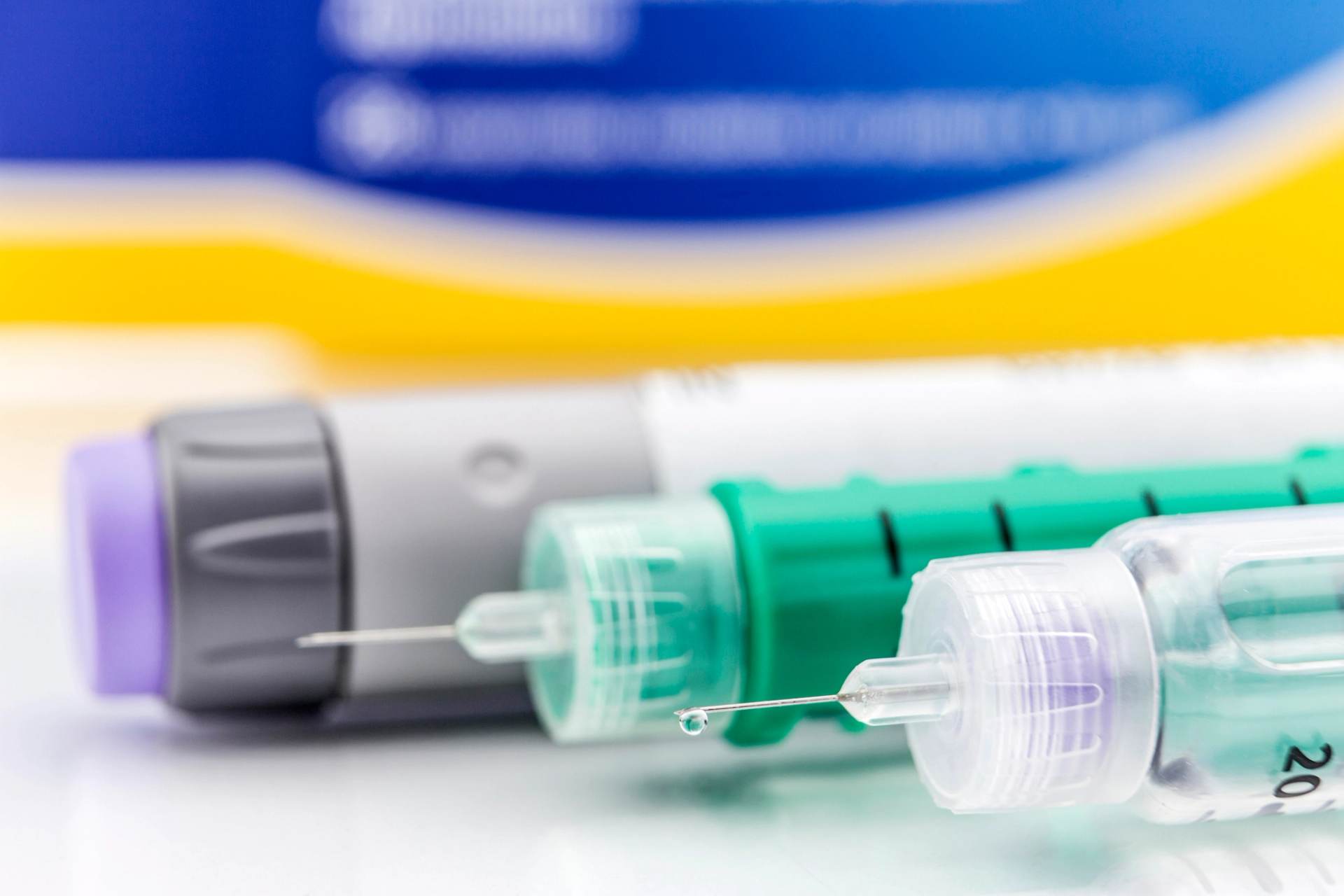
Transitioning patients to an alternative insulin
Mandy Galloway, Editor
Practice Nurse 2026;56(3):11-13
With the imminent withdrawal of the long-acting analogue insulin, Levemir, the clock is ticking to ensure that patients are transitioned to an alternative before remaining stocks are exhausted
Last year the pharmaceutical company, Novo Nordisk, announced that all Levemir® products were to be phased out completely by the end of 2026. Prescribers have been asked not to initiate any new patients on Levemir (insulin detemir), and to switch existing Levemir patients to an alternative in good time before stocks are depleted by December 2026.1
The decision is not the result of any safety concerns or quality-related issues, but motivated by the fact that Levemir is considered to be an ‘older’ insulin, and global demand is declining.1,2
All patients who are currently using Levemir will be affected. The products that are being discontinued are:
- Penfill® 100units/ml solution for injection, 3ml cartridges, and
- FlexPen® 100 units/ml solution for injection, 3ml pre-filled pens
However, a high number of patients – almost 30,000 – remain on Levemir products, prompting the Department of Health and Social Services to reissue a Medicine Supply Notification.3 In January 2026 alone, more than 28,000 insulin detemir items were prescribed, and in the financial year to date (April 2025 to January 2026), 342,047 items were prescribed, only slightly down from 416,629 in the previous 12 months (February 2025 – January 2026).4
Diabetes UK has warned that there is no benefit in patients hoarding supplies as this could lead to shortages while the insulin is still available and won’t prevent the need to change insulin eventually.1
Levemir (insulin detemir) is a long-acting analogue insulin, which provides up to 24 hours of basal insulin, and is injected once or twice daily. Approximately two-thirds of Levemir prescriptions are for type 1 diabetes, but it is also used in people with type 2, type 3c (pancreatic), and gestational diabetes.5
Joint guidance from the Association of British Clinical Diabetologists (ABCD) and the Primary Care Diabetes and Obesity Society (PCDO) warns that a ‘planned and pro-active approach is essential to avoid overwhelming services and depleting supplies of alternative insulins.’5
There are no direct alternatives to Levemir, which is the only analogue basal insulin to be licensed for twice daily use. Alternative insulins should be chosen after careful clinical review, with follow-up arranged to adjust the dose if required. Patients should also be encouraged to self-adjust their dose between reviews, depending on their blood glucose concentration determined by capillary blood glucose checks (4 times a day) or continuous glucose monitoring. HbA1c levels should not be used, as this will only provide the historical picture, and will not reveal any day-to-day variability in glucose control.5
Ketone monitoring should also be used to guide clinical decision-making.
When to refer
For patients with type 1 diabetes who are not currently under specialist care, referral to a specialist diabetes service should be made if their management cannot be safely supported in primary care. Other reasons to refer to a specialist service include:
- Patient is not achieving their individualised HbA1c target
- Has recurrent hypoglycaemia, or
- Has an HbA1c of < 48mmol/mol.5
Switching advice may also need to be sought through Advice and Guidance routes, depending on local policy.
ABCD/PCDO4 point out that secondary care specialist services may themselves require support with patient identification – so even if your patient is under specialist care, as a general practice nurse, you may need to check that they are being reviewed and switched in a timely manner.
Glucose instability
Changing insulins can risk glucose instability as there can be differences between absorption, potency and action of different insulins. It is therefore recommended that the initial dose of any alternative is reduced by 10-20% to avoid initial risk of hypoglycaemia.5
Patients at increased risk of glucose instability include those with:
- Impaired hypoglycaemia awareness
- History of severe hypoglycaemia or recurrent diabetic ketoacidosis (DKA)
- Evidence of lipohypertrophy at injection sites
- Frailty and/or older age
- Children and adolescents
- Renal or severe hepatic impairment
- High glucose variability on CGM
- Cognitive or functional impairment
- Learning difficulties or low health literacy
- Visual impairment and manual dexterity problems
- High alcohol consumption or binge drinking
- High level of physical activity.5
Alternative insulins
Levemir is a long-acting human insulin analogue for adults, adolescents, and children over 1 year old. Onset of action is 1–2 hours, peaking at 4–14 hours, and lasting 12–24 hours depending on dose. It can be given once or twice daily, with steady state reached after two to three doses if dosed twice daily. Duration depends on dose, injection site, blood flow, temperature, and physical activity.
Dose response is similar from person to person and in the same individual over multiple doses over time, indicating consistent pharmacodynamic effects. In contrast, human isophane insulin shows much greater variability in dose response, emphasising the need for careful monitoring and dose adjustment when switching someone from Levemir to formulations such as Humulin I®.5
Insulin glargine U100
Insulin glargine U100 is a long-acting basal insulin analogue with an onset of 2–4 hours, peak effect at 8–12 hours (though often described as 'peakless'), and duration of 20–24 hours, depending on dose, injection site and individual metabolism. Brands include Lantus®, Semglee®, and Abasaglar®.
Abasaglar and Semglee are biosimilars to insulin glargine.
Extensive laboratory studies comparing Semglee with Lantus have shown that insulin glargine in Semglee is highly similar to that in Lantus in terms of chemical structure, purity and biological activity. Additional studies showed that Semglee is absorbed into the body in the same way as the reference medicine, Lantus, and could be considered to act similarly on blood glucose.6
Because Semglee is a biosimilar medicine, studies on effectiveness and safety were not needed as these have been well established for insulin glargine. However, a supportive study in 558 patients with type 1 diabetes showed Semglee and Lantus had similar effects. Patients in the study had previously had their level of glycosylated haemoglobin (HbA1c), a substance which indicates how well blood glucose is controlled, brought under control with Lantus; continuing treatment with either Semglee or Lantus for 24 weeks indicated comparable control of HbA1c levels with both, the level changing byan average of 0.14% in patients given Semglee, and 0.11% in those given Lantus.5
Abasaglar is also a biosimilar to Lantus. Studies were carried out to show that the way Abasaglar is absorbed into the body and the way it acts on blood glucose were similar to Lantus. In addition, treatment with once-daily Abasaglar has been shown to be comparable to the reference medicine, Lantus, in two supportive studies involving a total of 1,295 adults with diabetes. In both studies, the main measure of effectiveness was the change after 6 months of treatment in HbA1c level.7
In one study, Abasaglar was compared with Lantus when added to short-acting insulin treatment in 536 patients with type 1 diabetes. Their average fall after 6 months was similar (0.35% in the Abasaglar group and 0.46% in the Lantus group).7
In the second study, treatment with Abasaglar or Lantus was compared in 759 patients with type 2 diabetes, as an addition to oral diabetes medication. Average HbA1c fell to below 7% in 48.8% of those given Abasaglar, and 52.5% of those given Lantus, with an average decrease of 1.29% and 1.34%, respectively.7
All three insulin glargine U100 products are licensed for once-daily dosing, but some individuals may need off-license, twice-daily administration if the effect does not last 24 hours, especially at lower doses. For off-label twice-daily prescribing, record that the rationale was discussed and patient consent obtained.8
Insulin glargine U300 (concentrated insulin)
Insulin glargine U300 (Toujeo®) is a concentrated, ultralong-acting basal insulin at 300 units/ml in contrast to the standard 100 units/ml. Its higher concentration leads to a slower onset (4–6 hours), a 36-hour duration, and steady state is reached in 3–4 days, offering stable 24-hour coverage. Dose adjustments should be made cautiously every 3 days due to its prolonged action. Toujeo is available in two device types, Solostar® (range 1-80 units) or Doublestar® (range 2-160 units), intended for patients on higher insulin doses.5
Insulin degludec U100/U200
Insulin degludec (Tresiba®) is an ultralong basal insulin that releases active insulin monomers slowly into the bloodstream. It has an onset of action of about 60 minutes, no peak, and a duration of about 42 hours. Steady state is reached in three days, so dose adjustments should be made cautiously every 3 days to assess their full effect before further changes.5
Human isophane insulin
Human isophane insulin (Humulin I), or NPH insulin, is an intermediate-acting insulin with a 90-minute onset, 4–8 hour peak, and 16-hour duration (range 14–24 hours). It is typically given twice daily, though once-daily dosing may suit some. Its variability in onset, peak, and duration can make dose conversion and stabilisation more challenging, often requiring extra adjustments.5
TABLE 1. RECOMMENDED OPTIONS WHEN SWITCHING FROM LEVEMIR
Current treatment | Preferred options | Alternative options | Notes |
Once daily Levemir | Insulin glargine U100 (Lantus, Abasaglar, Semglee) Human isophane insulin (Humulin I) | Insulin glargine U300 (Toujeo) Insulin degludec (Tresiba U100/U200) | Consider purpose of initial treatment choice: if to avoid overnight hypoglycaemia, an intermediate-acting insulin may be appropiate |
Twice daily Levemir (approximately equal doses) | Type 1 diabetes: Insulin glargine U300 (Toujeo) Insulin degludec (Tresiba U100/U200) Insulin glargine U100 (Lantus, Abasaglar, Semglee) Type 2 diabetes: Human isophane insulin (Humulin I) Insulin glargine U100 (Lantus, Abasaglar, Semglee) Insulin glargine U300 (Toujeo) Insulin degludec (Tresiba U100/U200) | Twice daily Levemir (approximately equal doses) Type 1 diabetes: Insulin glargine U300 (Toujeo) Insulin degludec (Tresiba U100/U200) Insulin glargine U100 (Lantus, Abasaglar, Semglee) Type 2 diabetes: Human isophane insulin (Humulin I) Insulin glargine U100 (Lantus, Abasaglar, Semglee) Insulin glargine U300 (Toujeo) Insulin degludec (Tresiba U100/U200)
24-hour insulin coverage is best achieved with an ultralong acting insulin (Toujeo/Tresiba) or twice daily insulin glargine (off-licence). If there is a difference of >20% between morning and evening doses, further evaluation is needed. Consider once daily Toujeo, Tresiba, or twice daily Lantus, Abasglar or Semglee (off-licence).
|
What GPNs need to do
- Do not initiate any new patients on Levemir
- Run clinical system searches to identify all patients currently prescribed Levemir
- Plan timely review for these patients to ensure transitions to an alternative insulin glargine are completed by September 2026.3
- Avoid initiating widespread changes without checking the current supply overview of alternative insulins to reduce the risk of precipitating a supply disruption of these products. Clinicians should aim to diversify prescribing across available alternatives to reduce supply risk where possible.2
- Consider the needs of specific vulnerable patient populations, such as those with dexterity and visual impairment when switching to alternative products.
- Inform patients why their insulin is changing and provide clear instructions on the new insulin regimen and device.2
- Manage device changes and provide training for the new device.2
- Advise patients to report any issues with glucose control. Close glucose monitoring is recommended during the transfer to another type or brand of insulin and in the initial weeks thereafter.2
- Further consultation and guidance from specialist diabetes teams may be required on the use of an alternative insulin.2
Important cautions
- For individuals with type 1 diabetes or type 3c diabetes, ensure 24-hour basal insulin coverage. Do not switch to once-daily Humulin I unless advised by a specialist diabetes renal clinic.
- When switching to Toujeo, achieving comparable glucose control may require a 10–18% higher dose. Start with a cautious dose reduction (10–20%) but expect the final dose to exceed the equivalent unit dose of Levemir.
- For patients on higher doses of insulin, check injection technique and for signs of lipohypertrophy.
- If doses exceed 80 units consider a higher concentration insulin (Toujeo) or splitting insulin glargine U100 into two doses, due to the reduced dose-response effect when injecting higher volumes subcutaneously (>0.5ml or 50 units of U100 insulin).
- If uncertain, seek advice and guidance or refer to community/specialist services following local pathways
Conclusion
In summary, the discontinuation of Levemir marks a significant shift in diabetes management for many patients across the UK and Ireland. With the phase-out driven by changes in global demand rather than safety concerns, it is essential that clinicians act proactively to ensure a smooth transition to suitable alternative insulins. This process must be carefully managed to minimise risks of glucose instability, taking into account the clinical needs and vulnerabilities of individual patients. Open communication, patient education, and close monitoring will be vital throughout the transition period. By working collaboratively with specialist teams and adhering to national guidance, general practice nurses can help safeguard continuity of care and optimise outcomes during this period of change.
Resources
- Diabetes UK. Levemir insulin withdrawal. https://www.diabetes.org.uk/about-us/news-and-views/novo-nordisk-to-withdraw-levemir-what-you-need-to-know
- Primary Care Diabetes Obesity Society (PCDO). https://cms.pcdosociety.org/uploads/Levemir_Discontinuation_Guideline_Final_110825_17d277acd3.pdf
References
- Diabetes UK. Novo Nordisk to withdraw Levemir insulin – here's what you need to know; January 2026. https://www.diabetes.org.uk/about-us/news-and-views/novo-nordisk-to-withdraw-levemir-what-you-need-to-know
- NovoNordisk. Discontinuation of Levemir Penfill and Levemir FlexPen; October 2025. https://assets.publishing.service.gov.uk/media/6928303f345e31ab14ecf625/DISCONTINUATION_OF_-_Levemir__Penfill__and_Levemir__FlexPen_.pdf
- Community Pharmacy England. Updated medicines supply notification: Levemir: April 2026. https://cpe.org.uk/our-news/medicine-supply-notification-levemir-insulin-detemir-flexpen-100units-ml-solution-for-injection-3ml-pre-filled-pens-and-levemir-penfill-100units-ml-solution-for-injection-3ml-cart/
- Wood C, Fisher L, Speed V. Bennett Institute for Applied Data Science. Discontinuation of insulin detemir – new measures for primary and secondary care; October 2025. https://www.bennett.ox.ac.uk/blog/2025/10/discontinuation-of-insulin-detemir-new-measures-for-primary-and-secondary-care/
- Association of British Clinical Diabetologists. Discontinuation of Levemir (insulin determir): Joint guidance from ABCD and PCDO Society; 2025. https://abcd.care/resource/current/discontinuation-levemir-insulin-detemir-joint-guidance-abcd-and-pcdo-society
- European Medicines Agency. Semglee (insulin glargine) Assessment Report; 2018. https://www.ema.europa.eu/en/medicines/human/EPAR/semglee
- European Medicines Agency. Abasaglar (insulin glargine) Assessment Report; 2014. https://www.ema.europa.eu/en/medicines/human/EPAR/abasaglar
- Medicines and Healthcare products Regulatory Agency. Off-label or unlicensed use of medicines: prescribers’ responsibilities; 2014, updated 2019. https://www.gov.uk/drug-safety-update/off-label-or-unlicensed-use-of-medicines-prescribers-responsibilities#examples-of-off-label-use-of-medicines
Related articles
View all Articles