Preventing hospital admissions: The role of medication support
Norman Niven CEO, The Medication Support Company and former director at BUPA
Practice Nurse 2026;56(3):18-22
Medication-related errors and non-adherence are a major cause of avoidable hospitalisations, increasing pressure on the NHS bed capacity and adversely affecting patients: so what can GPNs do to help?
According to a BMJ analysis, 237 million medication errors occur at some point in the medication process in England annually, almost 40% of which are in primary care.1 The analysis adds that 72% of these have little or no potential for harm but that the other 28% (66 million) are potentially clinically significant.
Alarmingly, according to the same analysis, prescribing in primary care accounts for 34% of all potentially clinically significant errors.
After staff, medicines are the biggest costs for the NHS, and in in 2023/2024, £19.9bn was spent in England on medicines alone.2
So what can be done that currently isn’t? Are all these issues down to human error (in the case of medication administration) and human nature (in the case of non-adherence) or are there system and process issues at play?
What can general practice nurses do to help, and are there real-world examples of attempts to address these problems?
What seems to be the problem?
The BMJ report states that medication errors by healthcare staff, are estimated to cost the NHS £98 million per year and cause or contribute to 1708 deaths.1
Meanwhile, approximately 50% of people do not take their medicines as prescribed, a statistic that dates back to a 2002 Cochrane review.3 Nonetheless, this figure remains a reasonable estimate.
Accidental (or unintentional) non-adherence is more common in elderly people, who are simply more likely to forget to take their medicines, take the wrong medicines for the dose time, take too many medicines, forget they have taken their medicines and take other medication, or not collect them from the pharmacy.
Deliberate non-adherence is seen amongst a wide spectrum of patients between the ages of 30 and 70, who don’t take their medicines for a variety of reasons. This type is the most difficult to explain and manage and accounts for most of the financial burden associated with non-adherence.
Accidental non-adherence could be identified by healthcare professionals (HCPs) or carers who visit patients at home, or by visiting relatives and friends.
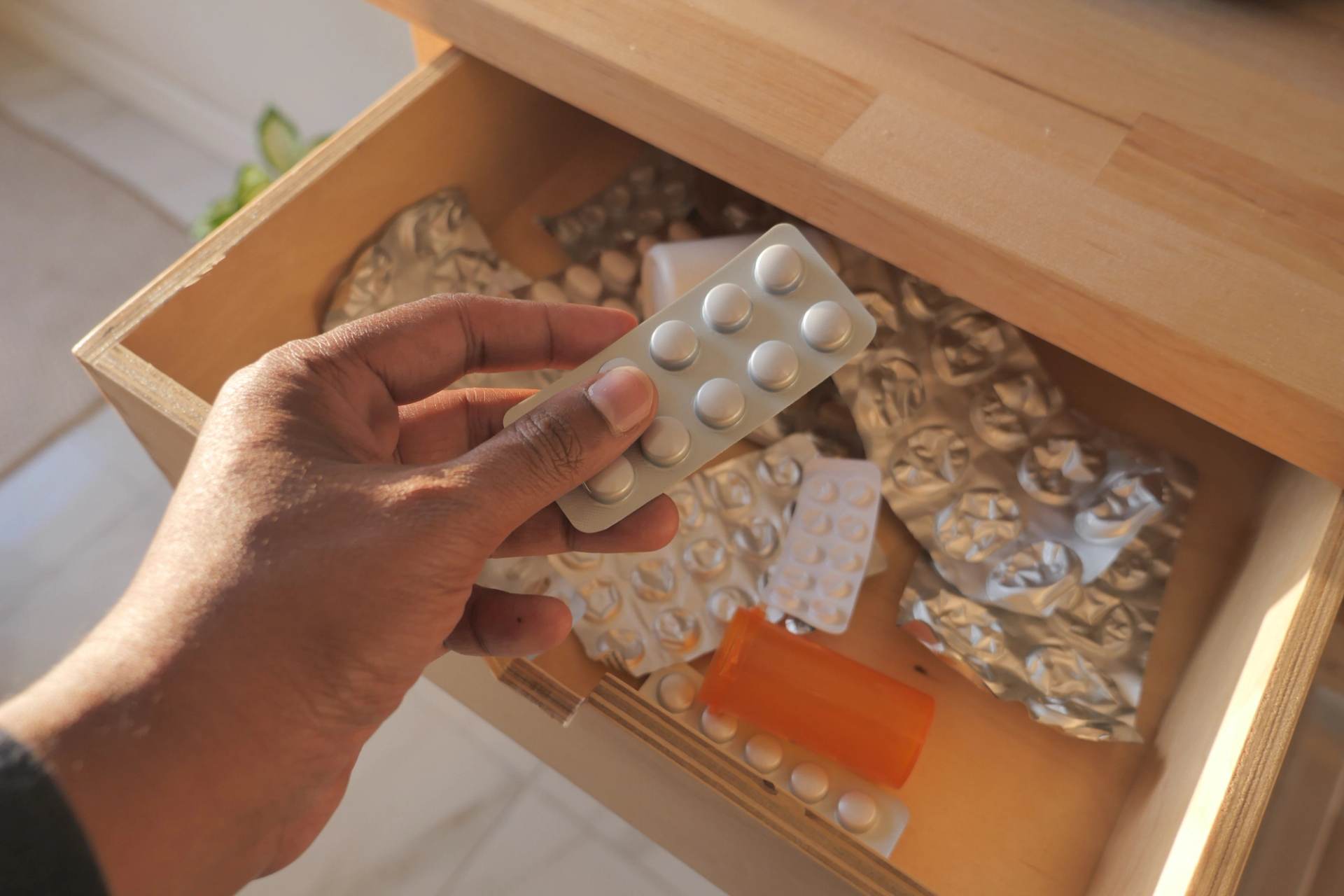
The visible indications of non-adherence include tablets or capsules scattered around the home; blister packs of medicines still containing the missed medicine doses; carrier bags from the pharmacy still unpacked; medicines stored across a number of rooms in inappropriate places, and general confusion about what medicines should be taken.
Regardless of the type of non-adherence, the only way to be sure the right meds are taken at the right time, and in the right dosage, is to witness it happening. Some form of in-home technology that supports communication with patients is one solution.
In trials of this technology, patients typically reached full adherence within 8 weeks of the start of monitoring. In addition, GP visits dropped dramatically as did hospitalisations.
Deliberately non-adherent patients are more difficult to spot, but once identified do respond well to the same remote monitoring as used for unintentionally non-adherent patients.
Another common problem is that patients are very often economical with the truth when it comes to discussing adherence with their clinician. Rather than asking directly if the patient takes their medication, asking different questions – such as, ‘Do you find it difficult to take your medication on time? might elicit a better understanding of adherence levels.
Non-adherence can have serious consequences; failure to take medicine as prescribed could lead to the illness persisting and the prescriber switching to another medicine. This creates false data on drug efficacy, which in turn could have serious implications for drug developers.
Finally, non-adherence is most dangerous for those patients needing ‘Time Critical Medication’ and for those living with serial mental illness, who are typically prescribed medicines that can have very serious consequences if not taken as directed.
These problems are not restricted to the UK. According to a report in the US Government’s National Library of Medicine, 75% of Americans have trouble taking their medicine as directed.4 Estimates are that approximately 125,000 deaths per year in the United States are due to medication nonadherence and that 33% to 69% of medication-related hospital admissions are due to poor adherence. (https://pmc.ncbi.nlm.nih.gov/articles/PMC3234383/#B3)
The total cost estimates for medication nonadherence range from $100 billion to $300 billion every year, when both direct and indirect costs are included.
Frequent consultations
Most GP practices suffer from what are known colloquially as frequent flyers, patients who attend much more than the average number of times, who take up a significant amount of doctors’, nurses’ and administrators’ time.
A project funded by NHS Liverpool Clinical Commissioning Group (now part of NHS Cheshire and Merseyside) looked at the causes of this issue, to see if patient non-adherence was a factor behind increased practice contact; medication switching and up-titrating were seen as warning signals.
At the conclusion of the project, which involved six practices in Liverpool and 36 patients who had very high rates of practice contacts, the causal link between patient medicine non-adherence and the frequency of visiting and contacting practices was clearly demonstrated.
By providing specialised medication adherence support for the patients, the rate of patient contacts and visits to the practices decreased by over 90%, leading to more time for face-to-face consultations and a substantial reduction in time spent by administration staff.
Accidents will happen
Some estimates suggest that as many as 4 in 10 patients are harmed in primary and ambulatory settings, but that up to 80% of this harm can be avoided.5
Preventable harm from medications is greatest in medicines affecting the central nervous system, cardiovascular system, and also hypnotics and sedatives, anti-inflammatory drugs and antibiotics.6
The most common medication administration errors are wrong dose, wrong time, wrong patient, wrong route, and wrong medication. Others include incorrect preparation, wrong administration rate, and failure to account for allergies.
According to an analysis in the BMJ, the annual rate of hospital admissions related to medication administration errors increased by 32% from 1999 to 2020, where it reached around 243 per 100,000 people.7
Admission rates among men increased by 16.7% and among women by 44.6% over the same period.
According to NICE, between 5% and 8% of all unplanned hospital admissions are related to medication issues,8 which includes patients not taking their medication properly.
One estimate suggests up to 250,000 hospital admissions annually in the UK are caused by adverse drug reactions, a large portion of which are preventable.
Non-adherence is a major issue for older people, with studies indicating that 10% of hospitalisations are attributed to not taking medications correctly.
Best practice
Together with in-house pharmacists, if available, general practice nurses have a significant role to play in reviewing medication regimes, reducing the number of medicines prescribed, reducing the number of doses per day, and most importantly, ensuring patients understand clearly what each medicine is for and when to take it.
Providing clear – preferably written – instructions to patients, explaining when and how to take their medicines, is key to improving medicine adherence.
A question-and-answer note is also very helpful in relation to many of the issues patients face every day – Does every 6 hours mean I have to take a dose at 3am? What if I miss a dose, do I take two?
Patients requiring a complicated medicine regime, particularly if they are elderly, have a disability or cognitive impairment, may benefit if their medications are provided in Dosette boxes, which clearly show which pills need to be taken at what time of day. Other types of reminders, such as automated dispensers, specially labelled packs and smartphone apps, are also available.9
These are simple but effective measures, and practice nurses are in an ideal position to make a real and measurable difference.
Completing the ‘Medication Loop’
The ‘Medication Loop’ (the stages involved in the delivery of the best patient health outcomes, using medicines prescribed in response to a consultation) begins with a consultation with the HCP, a GP or nurse, concerning a medical problem.
The HCP prescribes medicines that address the medical issues reported by the patient and (unless it is a dispensing practice) the patient takes the resulting prescription to a community pharmacy to be dispensed.
And that’s it.
But this process is missing one vital stage – ensuring the patient is taking this medication.
Most HCPs would naturally assume that the patient will take the medicines prescribed; after all, what would be the point of the consultation, prescription writing, and dispensing if they do not?
This key stage has been omitted for decades, but it is possible to remotely monitor patients taking their medication, using an in-home audio-visual hub to contact them each time their meds are due. The technology is readily available, and the services built around it can help enormously to improve overall health outcomes.
As noted above, in trials adherence levels have been seen to increase within 10 weeks to over 96% (full adherence).
But should all patients be monitored, at potentially enormous cost?
Fortunately, it is possible to identify patients who demonstrate telltale signs of being non-adherent, slashing the financial burden.
Using AI-based tools, it is possible to scan the complete list of a practice’s patient records, including their medication records, to identify ‘red flags’ that indicate those patients with a high probability of being non-adherent.
Nurse prescribers are ideally positioned to pioneer this game-changing new technology, to ensure non-adherent patients are identified and monitored, to ensure the Medication Loop is closed and the process is complete.
In addition, GPNs should monitor high-risk drugs to prevent adverse reactions that could lead to hospital admission. High-risk drugs include antidepressants, anti-anxiety medications, stimulants for ADHD, and antipsychotics for conditions like schizophrenia and bipolar disorder.
Deprescribing is a key task for nurse prescribers because polypharmacy and dose frequency are significant factors in medicine non-adherence.
Practice nurses/prescribers are facing more questions about the medicines they prescribe, and keeping up with all the changes, issues, and technology makes the role both more challenging and rewarding.
Switching medicines – a hidden problem?
Switching medicines often happens because prescribers are under pressure from government, NICE, and Integrated Care Boards to change from a branded medicine to a cheaper, bio-similar, generic equivalent medicine, to reduce costs.
Generic medicine manufacturers claim that their products are equivalent in function to the branded version, but that may not take account of different excipients that are found in these generic medicines, which can and often do cause issues for patients.
There is, however, another class of switching that is, on the surface, understandable but at the same time can be symptomatic of a much bigger, hidden problem – patient non-adherence.10
Patients who are non-adherent may feel unwell and complain to their doctor that the prescribed medication is not working.
Either a stronger version of the same medicine will be prescribed, or the patient will be switched to another medicine, which is considered more effective.
The doctor may also prescribe another medicine to support this new one – for example, if changing from paracetamol to a non-steroidal anti-inflammatory drug (NSAID), it is good practice to add in a proton pump inhibitor (PPI).
Unfortunately, this doesn’t solve the problem – the patient may simply continue their non-adherence with these new medicines.
If the prescriber continues to believe the patient is taking their medicines, they may well consider increasing the dose or a second switch to another medicine that is considered appropriate.
This scenario is played out every day in practices across the country and costs millions of pounds in wasted medicines and wasted practice time.
And all because the patient does not link the feeling of being unwell with the fact that the medicines, designed to treat their symptoms, are not being taken.
In this case, the switching is a clear indication that the patient is non-adherent, and prescribing more, different medicines is a waste of time and money.
The patient needs adherence to be assessed, and to be monitored to ensure prescribed medicines are taken.
Pharmacogenomics – genetics in medicine adherence
Pharmacogenomics is a new, gene-focused method of understanding why some drugs are ineffective in certain patients.
Research into how genetics affect a patient’s ability to metabolize a medicine’s active ingredient has advanced greatly in the past 15 years.11
Some patients have genes that significantly impact how they process certain medicines. The ability to metabolise these ingredients determines how well a medication relieves symptoms.
Recent genome studies reveal that some patients lack the necessary enzymes to metabolise drugs like codeine and tramadol, making these medicines ineffective for them.
Over 90 active ingredients have been identified as genetically neutralised, leading to their associated medicines being listed as ineffective for certain individuals.
Pharmacogenomic tests are available in the UK and globally to determine if patients can metabolise certain medicines. These tests, costing about £350, can be purchased online with results in 10 days. Some suggest routine genetic testing before prescribing or when treatments fail, but the potential cost to the NHS may make widespread adoption challenging.
And if a medicine is said not to be working by a patient, how is it possible to know if the problem is genetic or simply due to non-adherence?
If adherence was considered before genetic testing, it would eliminate around 80% of the patients reporting that their medication is not working.
Time critical medicines
Time critical medicines (TCM) are those that must be taken at the same dosage administration time, every day, and some can cause severe clinical damage or even death if administration is late or a dose is missed.
The number of TCMs is frequently underestimated but what matters is that these medicines must be treated with due care, and procedures put in place to ensure their safe and timely administration.
There are important requirements for managing TCMs that must be followed:
- They must be administered at the prescribed time, at each dosage time, every day
- If a dose time is missed, the TCM should not be taken until the next designated administration time
- If a dose is missed, an extra TC should NOT be taken at the next designated administration time
The interval between doses matters more than the exact administration time, as intervals are calculated to keep the active ingredient above the Clinically Active (CA) level and prevent symptoms from returning. If symptoms reappear, the patient risks clinical harm due to insufficient protection. Longer gaps between doses lead to greater reduction of the active ingredient and increased clinical impact.
Nurse prescribers need to be knowledgeable in all aspects of TCMs so that they can provide advice and support for the practice on a very significant, but hidden medication issue that can have major clinical consequences.
The GPN role in post-discharge patient support
This role is key to ensuring the discharged patient does not need to be readmitted to hospital due of their inability to manage their medications, which are often different to the ones they were admitted with.
There is an increased need for community pharmacy, GP and hospital liaison to ensure good communication with each other and the discharged patient.
Without extra post-discharge support and ongoing medicine administration support, over 20% of discharged patients will be readmitted to hospital within one month and over 35% will be readmitted by the end of month two.
These figures have a significant impact on hospital bed capacity and with delayed discharge being an ongoing and significant problem, the NHS is suffering a ‘perfect storm’ of capacity issues.
GPNs can play a vital role in liaison and communication with the patient, community pharmacy, GP and hospital discharge team.
Conclusions
It is important for GPNs to be aware of the level of medication errors and non-adherence as major causes of hospitalisations, creating an additional and avoidable burden on the NHS and leading to a host of downstream problems, from rescheduled elective procedures to extended delays in A&E departments.
Practice nurses have a very significant part to play in coordinating communication in post-discharge patients; being aware of TCMs and non-adherence when prescribing and adapting processes and protocols to counter the causes of the problems, thus reducing the impact on patients and NHS services.
Pharmacogenomics is an emerging field that offers potential benefits for medication services. Although it is still early days, GPNs need to stay informed and be ready to lead at the intersection of practice, patient care, and genetics when the time comes.
About The Medication Support Company
The Medication Support Company offers a complete medication management service, from internet-based home communications systems to remotely lockable medicines cabinets.
Our trained and accredited pharmacy technicians can contact people at home to support them with their medication regimes, ensuring the right drugs are taken at the right time, in the right dosage.
This leads to an improvement in population health that ultimately saves time and money for the NHS and local authorities.
https://medicationsupport.co.uk/
References
- Elliott RA, Camacho E, Jankovic D, et al. Economic analysis of the prevalence and clinical and economic burden of medication error in England. BMJ Qual Saf 2021;30:96–105.
- Clarke J. The NHS ten-year plan has missed the role of pharmacy professionals in community health services. Pharmaceutical Journal 2026;317(8006): https://pharmaceutical-journal.com/article/opinion/the-nhs-ten-year-plan-has-missed-the-role-of-pharmacy-professionals-in-community-health-services
- Gray A. How do we solve a problem like medicines adherence? The Pharmaceutical Journal April 2025; https://pharmaceutical-journal.com/article/feature/how-do-we-solve-a-problem-like-medicines-adherence
- Benjamin RM. Medication Adherence: Helping Patients Take Their Medicines As Directed. Public Health Rep 2012;127(1):2–3.
- World health Organization. Patient safety; September2023 https://www.who.int/news-room/fact-sheets/detail/patient-safety
- Hodkinson A, Tyler N, Ashcroft DM, et al. Preventable medication harm across health care settings: review and meta-analysis. BMC Med 2020;18:313
- Al Shoaraa OA, Qadus S, Naser AY. Medication prescription profile and hospital admission related to medication administration errors in England and Wales: an ecological study BMJ Open https://doi.org/10.1136/bmjopen-2023-079932
- NICE NG5. Medicines optimisation; the safe and effective use of medicines to enable the best possible outcomes: 2015. https://www.nice.org.uk/guidance/ng5
- NHS. Medicines: tips for carers; 2024. https://www.nhs.uk/social-care-and-support/practical-tips-if-you-care-for-someone/medicines-tips-for-carers/
- Aljofan M, Oshibayeva A, Moldaliyev I, et al. The rate of medication nonadherence and influencing factors: A systematic Review Electronic Journal of General Medicine February 2023 2023;20(3):em471.
- Fedik Rahimov, Jeffrey F. Pharmacogenetics. In Pharmacovigilance (2nd ed). 2025:31-42. https://www.sciencedirect.com/science/chapter/edited-volume/abs/pii/B9780443118814000041
- Gupta PK. Principles and basic concepts of toxicokinetics. In Drug Dose Regimen. https://www.sciencedirect.com/topics/medicine-and-dentistry/drug-dose-regimen
Related articles
View all Articles