Acute and chronic cough
Dr Knut Schroeder FRCGP
Dr Knut Schroeder FRCGP
GP, Concord Medical Centre, Bristol, and Honorary Senior Clinical Lecturer in Primary Health Care, University of Bristol
Self Care Forum Board member and author of ‘Diagnosing Your Health Symptoms For Dummies’ &
Sara Richards RN
Specialist Primary Care Nurse,
Practice Nurse Facilitator, Berkshire
Self Care Forum Board member
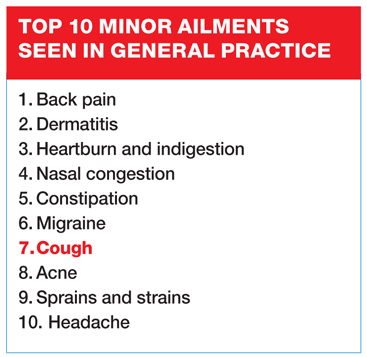
At this time of year, cough can present a significant burden for patients and general practices alike, with 2.6 million consultations per annum. Providing patients with self care advice can not only help them this winter, but can also reap benefits for years to come
WHAT IS COUGH?
Cough may be acute, lasting less than three weeks, or chronic, when it may persist for more than eight weeks. It can be dry or productive of sputum. Acute cough most commonly results from a viral upper respiratory tract infection (URTI). Although cough can be difficult to control and often impairs quality of life, it is rarely due to serious causes and is usually self-limiting. Chronic cough may suggest an underlying lung problem or conditions outside the lung, such as upper airway or gastrointestinal disease. Common external causes of cough include drugs, such as angiotensin-converting enzyme (ACE) inhibitors, asthma, environmental factors, working environment and gastro-oesophageal reflux disease. Cough may be the only manifestation of these conditions.
HOW COMMON IS IT?
Cough is one of the most common single causes for consultation both in primary and secondary care, with most adults experiencing between two and five episodes per year. About one in five people suffer a non-productive or productive cough during the winter months.
WHAT CAN PATIENTS EXPECT?
Although often distressing, acute cough is almost always benign and usually improves within three weeks. For such coughs, antibiotic treatment is unnecessary and ineffective. A post-infective dry cough, however, may easily persist for a few weeks. Further investigation is rarely needed for acute cough.
WHAT CAN PEOPLE DO TO HELP THEMSELVES?
Because the cough reflex is often centrally modulated, some people may be able to suppress their cough voluntarily and so reduce cough frequency. Simple home remedies such as ‘honey and lemon’, drinking fluids and sucking lozenges can also be effective. Smoking is one of the most common reasons for chronic cough, therefore, reducing or stopping smoking can significantly improve cough – in addition to many other health benefits.
WHICH OTC PREPARATIONS CAN PEOPLE USE?
There is little evidence for or against the effectiveness of over-the-counter (OTC) medicines. Despite the lack of evidence, some patients report subjective benefit from OTC preparations. Studies using cough challenge methodologies have shown that preparations containing dextromethorphan, menthol, sedative antihistamines, codeine or pholcodine may potentially help to reduce the cough reflex. Simple linctus is widely available without prescription, is cheap and a suitable first choice for people who want to try a non-prescription cough medicine, but patients should be made aware of the lack of a good evidence base for its efficacy.
WHEN SHOULD PATIENTS RETURN?
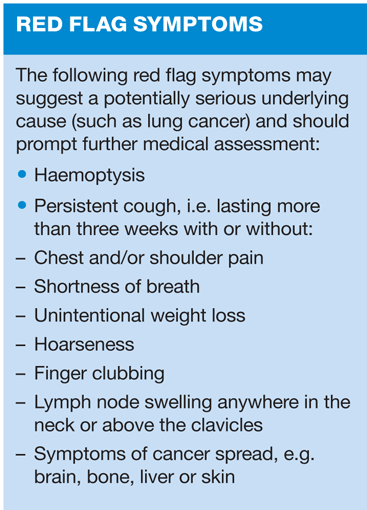
Patients should return for further assessment and possible referral for investigation if they cough up blood, are systemically unwell, have inhaled a foreign body, or present with ‘red flags’ (see Box) that may suggest a potentially serious underlying cause, such as lung cancer. Particular risk factors for developing lung cancer include a history of smoking, smoking-related chronic obstructive pulmonary disease (COPD), asbestos exposure and a previous history of cancer (especially in the head or neck).
WHAT ARE THE NEXT STEPS?
Chest X-ray and spirometry are among the first-line investigations for chronic cough and atypical acute cough. Further management may include additional diagnostic testing as well as treatment trials (for example, with bronchodilators or steroids), depending on the suspected underlying cause. ACE inhibitors should be discontinued in patients with a troublesome cough.
SUMMARY
Most cough is due to self-limiting and benign viral upper respiratory tract infection. Managing cough effectively requires a systematic approach, which may include ‘no treatment’ in viral cough as well as combining selected diagnostic testing and treatment trials for chronic cough

Related articles
View all Articles