
Using coaching models to support behaviour change
Donna Brookes QN Senior Lecturer Birmingham City University
Practice Nurse 2026;56(4):11-14
General practice nurses play a key role in supporting patients to make health-related behaviour changes, but education alone is often insufficient to change established habits. So what else can GPNs do to help?
In primary care, general practice nurses (GPNs) are often at the centre in supporting patients to make health-related behaviour changes that can improve outcomes and prevent disease progression. Helping patients to make informed decisions about smoking cessation, weight management, medication adherence, and the management of long-term conditions is an essential aspect of everyday nursing care. While education is undoubtedly important, simply telling patients what they should do does not necessarily lead to effective or sustained behaviour change. Most people recognise how difficult it can be to change established habits and routines. For patients living with multiple long-term conditions, these challenges are often heightened. Patients managing long-term conditions are often required to balance symptom management, medication adherence while also navigating advice from multiple healthcare professionals, who often each bring their own clinical priorities and areas of focus.
Because of this making meaningful and sustainable lifestyle changes can understandably feel overwhelming. Patients are more likely to adopt and maintain healthier behaviours when they are actively involved in setting goals, identifying their own solutions, and making decisions about their care.1 Central to the 10-Year Health Plan2 are three priorities including shifting care delivery from hospitals into local communities, with the aim of a greater emphasis on the prevention of illness rather than solely treating disease. So how can nurses who are at the centre of offering preventative interventions support patients in behaviour change?
Coaching
Using coaching approaches could offer nurses a structured person-centred method of supporting behaviour change. Rather than directing patients or providing advice alone coaching encourages patients to explore their own motivations, identify barriers, and develop realistic action plans. This article explores the role of coaching in general practice nursing and examines several coaching models that can be incorporated into routine consultations.
Why coaching matters in primary care
Many of the health challenges encountered within primary care require a continued behaviour change rather than short-term treatment interventions. Coaching approaches such as motivational interviewing aim to increase patients’ motivation and commitment to change by exploring their own values, goals, and reasons for change.1
Patients may understand the health benefits of changing their behaviour but still struggle to make the necessary changes.
While providing information and professional expertise remains an important part of nursing practice, evidence suggests that advice giving alone does not necessarily lead to ongoing behaviour change. Directive approaches can unintentionally position the healthcare professional as the ‘expert’ and the patient as a passive recipient of care, creating a power imbalance like the Parent/Child dynamic described in Transactional Analysis.3 Coaching promotes an Adult/Adult relationship, where nurses and patients work collaboratively to identify meaningful goals, explore barriers, and develop personalised strategies for change.4 This approach aligns with contemporary principles of shared decision making and patient centred care.5
Coaching differs from traditional advice-giving. Instead of telling patients what they should do, the nurse uses open questioning, active listening, reflection, and goal-setting techniques to help patients identify what is important to them and how they might achieve their desired outcomes.6
The principles of coaching (Box 1) align closely with the Nursing and Midwifery Council Code,7 which puts an emphasis on respecting individual preferences, shared decision making and person-centred care.
Box 1. The Principles of Coaching Several key principles underpin effective coaching practice:
|
The GROW model
One of the most widely recognised coaching frameworks is the GROW model developed by Sir John Whitmore. The four stages Goal, Reality, Options and Will help focus the consultation and ensure that discussions remain important to the patient and directed towards achieving meaningful outcomes.8
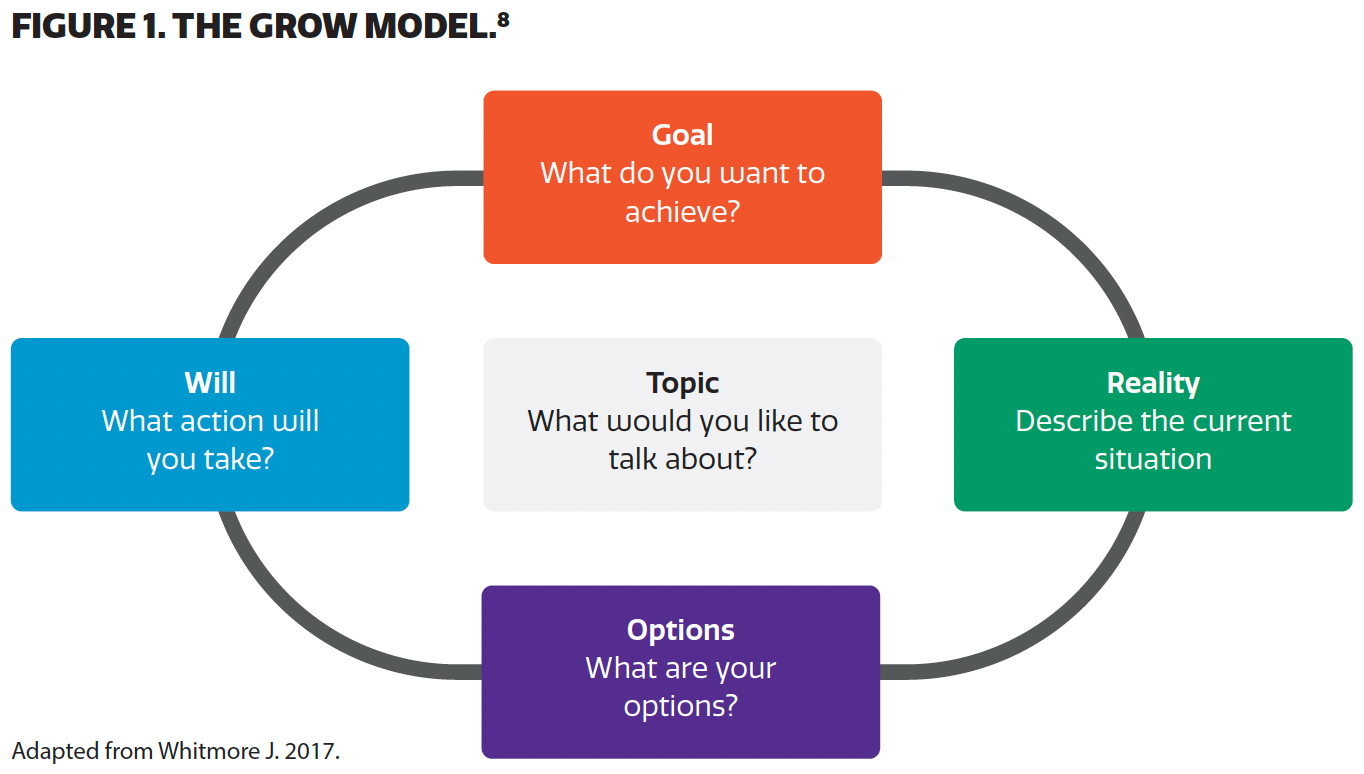
GROW stands for:
Goal
The goal-setting process must be led by the patient, as meaningful change is more likely when goals are personally relevant and aligned with what matters to the individual. While healthcare professionals may identify areas where change could improve health outcomes, these may not reflect the patient’s own priorities or readiness for change. A coaching approach recognises the patient as the expert in their own life and supports them to identify goals that are meaningful and achievable.
Reality
The reality stage involves exploring the patient’s current situation and understanding the gap between where they are now and where they would like to be. The focus is on developing awareness of their current behaviours, strengths and any barriers that may be influencing progress towards achieving their goal. By reflecting on their current reality patients can identify what is working well, what challenges they may face and what changes may be realistic and achievable.
Options
This stage encourages the patient to explore the different possibilities available to them and consider potential strategies for moving towards their goal. The focus is not on the nurse providing the solutions. The nurse provides a space for reflection so the patient can identify their own ideas. They may explore what they have tried previously, what worked well and what they might do differently to develop realistic and achievable approaches to change.
Will or Way forward
This final stage focuses on translating the discussion into a realistic plan of action. The patient identifies a specific achievable step they are willing and confident to take towards achieving their goal. The nurse supports the patient to clarify what they will do, when they will do it and what support they may need to maintain progress. Agreeing on a clear action plan helps promote commitment, accountability and ownership of the change process.
In coaching, the coach listens actively and maintains focus on the coachee and supports them to identify and set their own goals. Together they can explore possible ways forward and the coach may use encouragement and reflective listening to build motivation for change. Through this process, individuals often experience personal benefits including increased confidence and greater emotional maturity.9 This can be directly applied to the nurse and patient relationship.
For example, a patient may identify that they wish to focus on losing weight.
Rather than advising the patient to lose weight and exercise more, the nurse might ask:
- What would you like to achieve over the next month?
- What challenges are currently making this difficult?
- What options have worked for you previously?
- What is one small step you feel confident taking this week?
The simplicity and flexibility of the GROW model make it a practical tool for nurses, as it can be incorporated into routine consultations without requiring lengthy or structured coaching sessions.
Motivational interviewing
Although not a coaching model, motivational interviewing (MI) is highly compatible with coaching approaches and has a strong evidence base for behaviour change.
Developed by Miller and Rollnick,1 motivational interviewing aims to strengthen an individual's motivation and commitment to change by exploring ambivalence.
Core skills include:
- Open questions
- Affirmations
- Reflective listening
- Summarising
For example, a patient who smokes may understand the health risks but feel unable to quit. Rather than the nurse spending time persuading the patient to stop smoking, the nurse explores their motivations and concerns:
- ‘What concerns you most about continuing to smoke?’
- ‘What benefits do you think you might experience if you reduced your smoking?’
This approach helps patients articulate their own reasons for change, which is associated with greater long-term success.
The OSKAR Coaching Model
The OSKAR model is based on solution-focused coaching.10
OSKAR stands for:
Outcome
The first stage explores the patient’s desired outcome and what success would look like for them. The focus is on identifying a goal that is personally meaningful rather than one imposed by the healthcare professional. For example, a nurse may recognise that improving weight or blood pressure would benefit a patient, but the patient’s priority may be having more energy to walk their dog. The coaching conversation begins with what matters most to the patient.
Scaling
Scaling questions encourage patients to reflect on their current position, confidence, motivation or readiness to make a change. Using a numerical scale for example, 0–10 allows patients to consider where they are now and identify what may help them move closer towards their goal. The purpose is not to judge progress but to encourage self-reflection, recognise existing strengths and identify realistic next steps. The use of follow up questions can help uncover strengths, for example:‘What makes you a 5 rather than a 2?’or ‘What would help you move towards a 6?’ This approach helps patients recognise their own capabilities giving them confidence and the ability to identify achievable changes.
Know-how and resources
This stage focuses on exploring the patient's current knowledge and the resources available to support them in achieving their goal. Instead of concentrating on the barriers to change, the conversation encourages patients to identify the strengths, skills and resources they already possess that can help them succeed. These may include previous experiences where they have successfully made changes, support from family and friends, or guidance from healthcare professionals. Any gaps in knowledge can be identified and addressed collaboratively, ensuring the patient has the information and support they need. By recognising and building on their existing strengths and resources, patients are better placed to develop realistic, practical and achievable plans for change.
Affirm and action
The affirm and action stage aims to build on the patient's strengths while supporting them to identify realistic actions they are willing to take. The healthcare professional recognises the patient's efforts, acknowledges previous achievements and provides encouragement to enhance confidence and motivation. Working collaboratively, they agree on small, specific and achievable actions that will help the patient move towards their desired outcome. The emphasis is on actions chosen by the patient rather than directed by the nurse, as this promotes greater commitment and increases the likelihood of sustained behaviour change. Agreeing on clear and achievable next steps also fosters a sense of ownership and responsibility for the patient's progress.
Review
The review stage focuses on evaluating the patient's progress towards their goal, recognising achievements and discussing any challenges encountered since the previous conversation. Reviewing the patient's progress provides an opportunity to acknowledge and celebrate successes, no matter how small, helping to reinforce their confidence and motivation to continue making changes. Where goals have not been fully achieved, the discussion focuses on identifying what has been learned from the experience and exploring any barriers that may have affected progress. It is important that patients do not view achieving their planned goal as a failure, and that nurses remain non-judgemental to encourage honest and open communication. The patient and healthcare professional can then review and adapt the action plan, identify any additional support required, and agree on appropriate next steps. Regular review helps maintain motivation while ensuring that goals remain relevant and continue to reflect the patient's needs and circumstances. Overall, the OSKAR model encourages patients to focus on their strengths and potential solutions rather than the problems they face.
Practical coaching skills for nurses
Nurses do not need to become professional coaches to incorporate coaching skills into everyday consultations. The coaching approach does not aim to stop giving clinical advice. Where there is a safety concern or evidence-based recommendation, nurses should provide appropriate information. The difference is that advice is offered in collaboration with space for the patient’s perspective and preferences.
Simple strategies are shown in Box 2.
Box 2. Asking More, Telling Less Instead of: ‘You need to exercise more.’ Try: ‘What opportunities do you think you might have to become more active?’ Using Scaling Questions ‘On a scale of 1 to 10, how confident do you feel about making this change?’ Exploring Strengths ‘What has helped you succeed with similar changes in the past?’ Encouraging Reflection ‘What have you learned about yourself from previous attempts?’ |
Challenges and limitations
Although coaching approaches provide significant opportunities to support patient empowerment and behaviour change, their integration into primary care practice may present several challenges. These include competing demands on consultation time; some patients may have expectations that professionals provide direct advice and solutions which may create challenges when introducing coaching approaches that emphasise collaboration. A more directive style may still be required if patients are anxious, unwell or unfamiliar with managing their condition. Some patients may be in a situation when they may not yet feel ready or motivated to make a change.11
For some patients the ability to initiate and sustain behaviour change is influenced by wider social determinants of health including socioeconomic circumstances. Despite an individual’s awareness of healthy eating recommendations, financial constraints may limit access to affordable food choices. Housing insecurity or unsuitable living conditions may affect physical and psychological wellbeing, creating additional stressors that can influence a patient’s readiness and ability to engage in discussions about behaviour change. Employment pressures such as shift work or insecure employment may create barriers to attending appointments and maintaining lifestyle changes.12,13 Inequalities in education and health literacy can influence an individual’s ability to access, understand and apply health information. Social isolation or limited support networks may make continuing behaviour change more challenging12,13 as social connection plays an important role in supporting health, wellbeing and resilience.14 Recognising these factors is essential when adopting a person-centred approach, as health behaviours are shaped not only by individual motivation but also by the social and environmental circumstances in which people live.12 Nurses need to consider that behaviour change is complex and readiness for change is influenced by a patient's current circumstances rather than simply their willingness to change.
Coaching should not be viewed as a substitute for clinical expertise, professional judgement or health education. It should be used as a complementary approach alongside evidence-based healthcare interventions, enabling patients to develop the confidence, skills and motivation required to apply health information to their own circumstances.
Conclusion
General practice nurses are ideally placed to support behaviour change through coaching approaches. By incorporating models such as GROW, Motivational Interviewing, and OSKAR into routine consultations nurses can promote patient empowerment, self-management and sustainable health behaviour change.
As healthcare increasingly focuses on prevention and personalised care, coaching skills are becoming an important component of contemporary nursing practice. Even small changes in communication style such as asking open questions, exploring patient motivations and supporting collaborative goal setting enhance patient engagement and outcomes.
References
1. Miller WR, Rollnick S. Motivational interviewing: helping people change and grow. 4th ed. New York: Guilford Press; 2023.
2. Department of Health and Social Care. Fit for the future: 10 Year Health Plan for England. https://www.gov.uk/government/publications/10-year-health-plan-for-england-fit-for-the-future
3. Berne E. Games people play: the psychology of human relationships. New York: Grove Press; 1964.
4. Rollnick S, Miller WR, Butler CC. Motivational interviewing in health care: helping patients change behavior. New York: Guilford Press; 2008.
5. Jackson PZ, McKergow M. The Solutions Focus: making coaching and change SIMPLE. 2nd ed. London: Nicholas Brealey Publishing; 2006.
6.NICE NG197. Shared decision making. 2021. https://www.nice.org.uk/guidance/ng197
7. Nursing and Midwifery Council. The Code: professional standards of practice and behaviour for nurses, midwives and nursing associates; 2018 https://www.nmc.org.uk/globalassets/sitedocuments/nmc-publications/nmc-code.pdf
8. Whitmore J. Coaching for performance: the principles and practice of coaching and leadership. 5th ed. London: Nicholas Brealey Publishing; 2017.
9. Starr J. The coaching manual: the definitive guide to the process, principles and skills of personal coaching. 4th ed. Harlow: Pearson Education Limited; 2016.
10. Jackson PZ, McKergow M. The Solutions Focus: making coaching and change SIMPLE. 2nd ed. London: Nicholas Brealey Publishing; 2007.
11. Rollnick S, Miller WR, Butler CC. Motivational interviewing in health care: helping patients change behavior. New York: Guilford Press; 2008
12. World Health Organization. Closing the gap in a generation: health equity through action on the social determinants of health; 2008 https://www.who.int/publications/i/item/WHO-IER-CSDH-08.1
13. Marmot M, Allen J, Boyce T, Goldblatt P, Morrison J. Health equity in England: the Marmot Review 10 years on. https://www.instituteofhealthequity.org/resources-reports/marmot-review-10-years-on/the-marmot-review-10-years-on-full-report.pdf
14. World Health Organization. Social connection linked to improved health and reduced risk of early death; 2025. https://www.who.int/news/item/30-06-2025-social-connection-linked-to-improved-heath-and-reduced-risk-of-early-death
Related articles
View all Articles