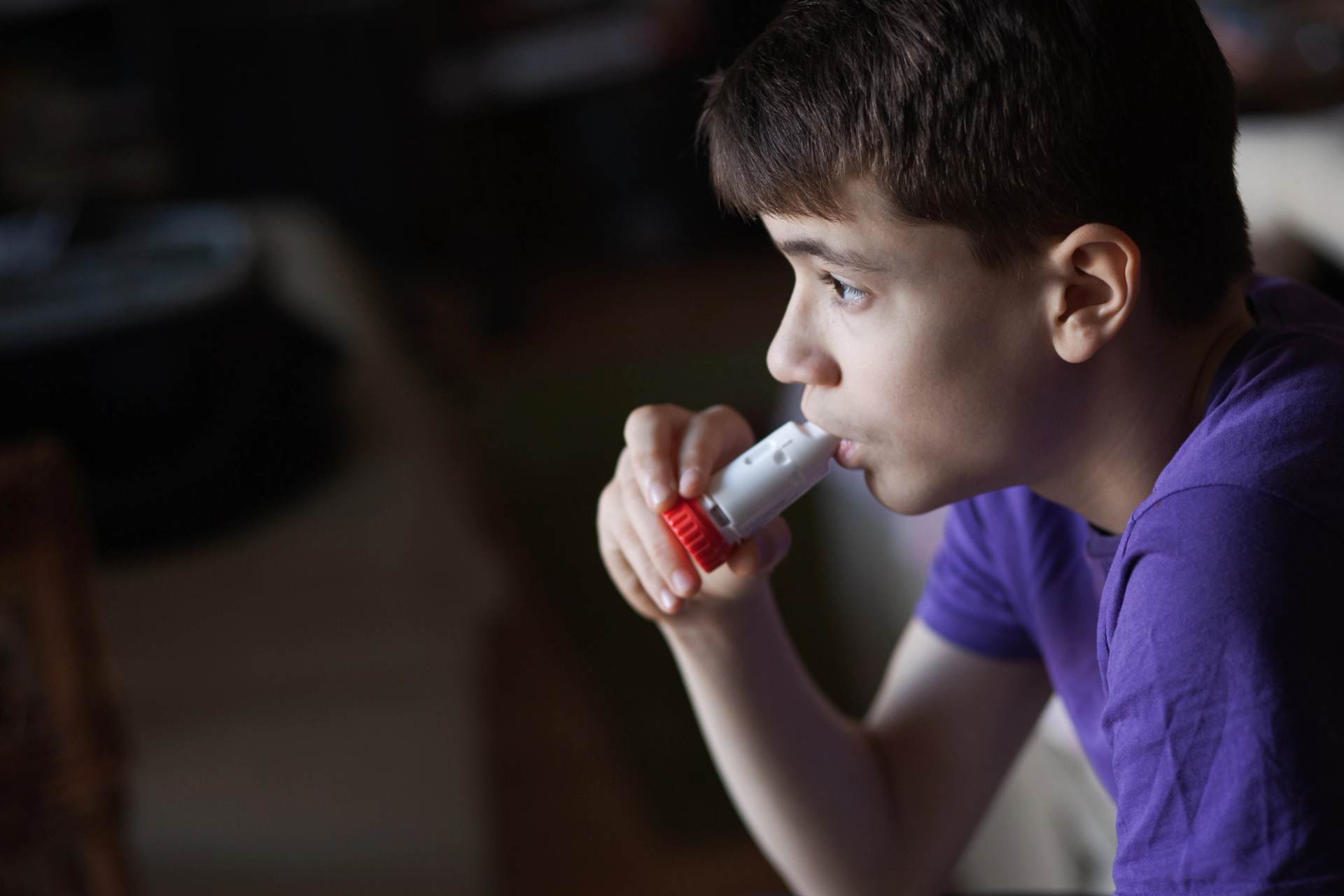
Managing asthma in children and young people: A respiratory in-reach project
Lynn Johnston. Dip HE, Nursing (Adult), BSc (Hons) Adult Nursing Respiratory Clinical Educator, Hartlepool and Stockton Health | Vicky Holt. MSc Public Health, BSc (Hons) Adult Nursing Director of Nursing, Hartlepool and Stockton Health
Practice Nurse 2026;56(3):14-17
Regular reviews of children with asthma are essential to optimise management – but what happens when the children are simply not brought in for their appointments? A local project aimed to take care closer to home, outside the practice
Asthma continues to claim lives among children and young people (CYP) and to negatively impact their health and wellbeing. The National Child Mortality Database report documents that between April 2019 and March 2023 there were 54 deaths in England because of asthma.1 The deaths occurred across all age groups, ethnic backgrounds and occurred throughout the seasons of the year. 65% of those CYP who died had attended an Accident and Emergency department or had a hospital admission in the 12 months prior to death and 87% had been issued with 3 or more reliever inhalers, another indicator of poor asthma control. Any death from asthma must be seen as a failure of treatment.2,3
North East and North Cumbria Integrated Care Board (NENC ICB) data for September 2023 to August 2024 showed that 33.2% of CYP had not received a review of their condition by accessing traditional primary care provision.4 Patients who live with asthma are annually invited to attend a nurse appointment at their GP surgery for a review of their long-term condition. The appointment will traditionally be offered during 'working hours', Monday to Friday, between 8am and 6pm. This may be suitable for those delivering the care in general practice but can sometimes be problematic for patients. They might prefer a different approach.
We set out to pilot and evaluate an in-reach model of care provision for CYP who are living with asthma, with the aim of improving access to asthma care by providing nurse-led long term condition reviews closer to the patient's home in more convenient settings away from general practice. As asthma is a reversible condition, our aims were for the CYP to:
- Be seen and reviewed
- Be symptom free
- Have increased wellbeing, with no restriction on their normal activities due to poorly controlled asthma.
Promoting self-management and understanding of their condition was paramount.
Using a multi-professional approach at the time of the annual review, we also wanted to link families with social prescribers when there was an identified need. This group of professionals can help to support patients by tailoring care to the individuals' needs – for example, signposting to housing support or smoking cessation services and involving the wider family when possible.
We aimed to support general practice by improving access for patients, but we also wanted to inspire practice nurses to champion ongoing excellence in asthma care, allowing them to try out working in a different way away from their usual setting.
Getting started
This 12-month project used a proactive approach to identify CYP, aged 5-18 years, who were not being brought to their annual asthma review and those who appeared to have poorly controlled asthma. We used search tools embedded in the practice clinical systems to identify children to create a list of those who would be eligible for inclusion in the project.
The in-reach approach used provided care in accessible community-based locations, including schools, with the aim to remove barriers associated with access to care in general practice. Nurse-led long-term condition reviews were delivered by a general practice nurse who holds a qualification in asthma management and who also has experience in caring for children who live with asthma.
Digital technology was adopted, where clinical benefit was identified, to aid patient empowerment and self-management of asthma. Access to 'myasthmaapp'5 was provided via licenses purchased by the local ICB and 'smart rescue' devices6 were issued to patients who would benefit from understanding more about their metered dose inhaler use.
Data gathered from searching clinical systems enabled us to gain a better understanding of health inequalities and to focus on groups of patients that might need a different approach to their asthma care. We were able to group patients according to their postcodes and we made connections with a local Voluntary Community and Social Enterprise organisation (VCSE) Catalyst7 to share insights into the community. This helped us to identify appropriate hubs for our project as VCSEs have a particular understanding of the population in a locality to help shape services.
We prioritised accessibility by offering appointments either early in the morning or after school at community family hubs and at a local youth club managed by Five Lamps,8 a local charity. Flexibility was key, patients had an appointment time, but we were understanding if children were slightly late. We adapted as the project progressed and we moved to providing review appointments at the weekends from a GP surgery site, alongside the community hub location clinics. Traditional general practice provision has not provided access to long-term condition management clinics outside ‘normal’ practice hours. Some parents who work told us this would be helpful.
The project was further adapted and moved to focus on opportunities for asthma reviews to take place in schools. Since poorly controlled asthma can often affect the education of CYP,9 this felt like a suitable location alongside providing out-of-school-hours appointments through this project. We felt this was important. Building relationships with the 0-19 healthcare team in our locality helped us to contact schools in our area.
Conducting asthma reviews in the school setting seemed like the natural next step but there were challenges that we had to navigate to implement this part of the project. Coordinating a suitable time in the school calendar was difficult to tally with our nurse's availability, along with finding a suitable space to afford privacy. The strict governance procedures and school processes needed to be addressed too for us to work from the school site. This element of the project took a while to plan but it was worth the effort as it enabled further improved access to healthcare for patients and allowed us an opportunity to educate the wider school team about the importance of CYP having an annual asthma review. We were able to work with one of the schools to engage with the recommendations of The National Capabilities Framework,10 and they consequently worked towards gaining accreditation as an asthma-friendly school.
We also had opportunities for wider health promotion around asthma at local events, which helped to raise general awareness in our local community. Events held at local family hubs brought together representatives from both social and healthcare organisations, giving us an opportunity to book appointments directly for patients, further helping to improve access. A summer event and market day in the local High Street allowed opportunities to promote health, which was supported by our local council and the smoking cessation team. This allowed us to encourage parents to engage with the care provision provided by this project, as well as improving awareness of their own health needs.
What we found
We identified 143 CYP in need and therefore eligible for inclusion. Of these, 111 patients (77.6%) successfully engaged with the service and were seen.Coded entries in the medical records, relating to key performance indicators (KPIs), were used to measure the impact of the project.
Analysis of these KPIs highlighted an overall positive impact from the project. Improved Asthma Control Test (ACT) scores and increased numbers of eligible children having a Personal Asthma Action Plan (PAAP) in place would be a key measure of quality.11 We reviewed 111 CYP from 16 practices in 9 community locations, issued all of them a PAAP, and recorded an ACT score for all of those seen in person (86% of total patients). We identified that 15% of patients required further review. All those seen for follow up had better control of their asthma, evidenced by improvement in their individual ACT scores. This is demonstrated in the case study included.
Parents gave positive feedback about the project. One said it was particularly beneficial to talk to a professional who could ‘talk on a level’ with a teenager. Being able to access care closer to home was also described as very useful, given the demands of school attendance. Another expressed hope that the service would continue to move forward for all children with long term conditions, and that funding would continue.
What we learned
The use of clinical system searches and postcode grouping provided valuable insight into patterns of non-attendance and potential inequalities. Delivering care in community locations appeared to reduce practical barriers such as travel, work commitments and school absence. However, further evaluation would be needed to determine whether the model reduced inequalities in outcomes, rather than access alone.
We adopted booking processes which aimed to positively impact on attendance rates. We used a personal approach with an administration team member with excellent communication skills booking appointments via the telephone. This allowed explanation of the project with an aim to improve engagement. This approach comes with the drawback of being time-consuming as the team member needed dedicated time to telephone individuals.
Electronic booking systems were also used. Patients were sent text messages which gave details about the project and prompted them to contact us to book an appointment. The use of various communication channels with patients proved beneficial and could be further enhanced if it was possible to provide a link for direct booking.
The number of patients who do not arrive for appointments is something to reflect upon. We offered 242 appointments and 51 CYP were not brought. The nurse leading the clinic would always try and make telephone contact if this happened. The intention was to rebook the appointment to suit the patient and their parent, but if rescheduling a face-to-face appointment was not possible, and the patient and parent were agreeable, then the annual review was completed via telephone. Never an ideal option, this still created an opportunity for assessment, education and the issue of a written PAAP. If the nurse was unable to contact the child/family, she would always follow safeguarding protocols to make sure the child was followed up.
The number of patients seen and reviewed during this project is a reassuring positive outcome. Those children who came for review may not have been seen in the traditional general practice setting, therefore would not have had their condition reviewed if the project had not taken place.
A further reflection highlights that several children seen through this in-reach approach were those who had ‘fallen under the radar’ since their initial visit to general practice for respiratory symptom investigation. The COVID pandemic appeared to have led to some children being lost to follow-up, and this project helped reconnect with them.
An incidental finding was that the children who had not completed the diagnostic process were often being issued inhaled medications but had not been called to the practice for an annual review. This could have been because of their suspected diagnosis had not yet been formally coded in the records. The identification of children who were receiving inhaled medication without a formally coded diagnosis highlights the importance of accurate clinical coding as a patient safety and quality issue.
Because the diagnostic process was incomplete, the children did not receive a PAAP from the healthcare professional at the point the diagnosis was confirmed and their condition reviewed. The lack of a PAAP could lead to inappropriate self-management and to address this issue, all 111 children we saw were provided with one.
Offering review appointments from community locations was beneficial for parents as the locations of the clinics were generally closer to their homes. Being able to offer an asthma review for CYP during school hours on the school site was also well received by parents who sometimes struggled to navigate taking their child out of school to attend general practice during weekday working hours. Using a GP surgery location on Saturday mornings proved popular with working parents. Although this sometimes meant a longer journey, a Saturday appointment was often more convenient.
Digital technology is identified as an essential element of the 10 Year Plan for England.12 We intended to embrace technology within our project where there was clinical benefit. The uptake of a self-management app and a device which tracks inhaler usage was low. This may have resulted from varying levels of staff confidence in promoting the technology and lack of time to prioritise its use during the appointment. The limited uptake of digital tools highlights an important learning point: technology adoption cannot be assumed, even where clinical benefit exists. Successful integration likely requires earlier patient engagement, clearer demonstration of value, and additional clinician training to confidently promote digital self-management tools.
Involving the social prescribers in the project was positive for parents. A member of the social prescribing team was on site at the time of the sessions in the hubs, at the youth club, and at the weekend surgery appointments, and this allowed holistic care for families who had additional social care needs.
Allowing practice nurses to work away from general practice boosted their confidence and hopefully inspired them to think about providing care differently. One nurse commented, ‘I really enjoyed being part of this project and seeing how positively parents and children responded to the flexibility and resources we could offer.’ As a legacy, recruiting a network of respiratory advocates across local PCNs has strengthened shared expertise in practice.
It is essential to mention that this project would not have been possible without the hard work and support of the team working for Hartlepool and Stockton Health GP Federation, some of the local PCN practices and funding from The Burdett Trust for Nursing whose contributions made it possible.
Limitations
This project was delivered within one small area and over a 12-month period. Although improvements were seen in engagement and individual asthma control, longer-term outcomes such as impact on hospital attendances, oral steroid use or sustained symptom control were not measured. The project relied on dedicated clinical and administrative time, which may not be easy to reproduce without ongoing funding and workforce capacity. As a pilot, the approach benefited from focused energy and enthusiasm, and further evaluation would be needed to understand whether similar outcomes could be achieved at scale and embedded in practice.
However, this project reflects key principles associated with emerging neighbourhood health models, particularly the emphasis on delivering care closer to home and strengthening collaboration across primary care, education and the voluntary sector.
By working with local hubs, schools and social prescribing services, the project tested whether proactive, place-based asthma reviews could improve engagement among children who were not accessing traditional general practice appointments. While small in scale, the findings suggest that neighbourhood-level working may offer a practical route to reducing barriers to care and addressing wider determinants of asthma control.
Case Study
An 8-year-old boy was brought by his mother for asthma review at a community clinic. In the previous 12 months he had attended the hospital with acute asthma symptoms and had been invited to make an appointment at the general practice for a follow up review but had failed to do so.
He was not on an inhaled steroid but was using prescribed salbutamol as a reliever, of which there had been 3 issues in the last 12 months.
Presentation: he was experiencing a persistent day and nighttime cough with chest tightness and poor exercise tolerance.When assessed, his ACT score was 9/25 which supported the impression of poorly controlled asthma. Measurement of Fractional Exhaled Nitric Oxide (FeNO, a test used to aid diagnosis and ongoing management of asthma11) was available at the appointment, and the result was high (51ppb) indicating airway inflammation.FeNO testing availability in clinics facilitated evidence‑based decision‑making.
The patient was assessed for use of a dry powder Turbohaler device using an audible trainer whistle,14 and his technique was deemed suitable. He was prescribed a budesonide Turbohaler as preventative treatment to be taken twice a day regularly to treat his asthma symptoms and he was given a terbutaline Turbohaler for relief of symptoms,* to simplify the regime and reduce inhaler technique errors which could arise from use of different devices. Along with a PAAP, he was given education about his condition.
Follow up: The patient was followed up with a telephone call (at their request), and his symptoms had significantly improved. ACT score was 22/25 indicating an overall improvement in symptoms and control.
Reflections: the telephone follow up did not allow for a repeat of the FeNO test which would have been beneficial to support the ongoing education delivered to the patient and his parent.
*Since the implementation of this project, the new NICE asthma guideline may now result in assessment for, and this patient being started on, a combination therapy inhaler for maintenance and symptom relief. This case study demonstrates how quickly practice guidelines can change and the challenges that nurses in general practice face to keep up to date professionally.
Conclusion
Patients and their parents may fail to prioritise an annual asthma review, particularly in periods of stability.13Adapting current models of long term condition management by providing care closer to home may prove to positively impact on outcomes for this group of patients.
Fostering collaboration with other health and social care organisations is crucial towards promoting integrated neighbourhood health and trying new ways of working, including a multiple model approach, will go a long way to improve healthcare for individuals in the future.
This project demonstrated that providing community in-reach clinic provision for CYP people with asthma increased engagement with annual review and improved individual asthma control. The project highlights the need for targeted provision of asthma care for CYP and the need for a personalised and adaptable approach which reaches beyond the traditional general practice setting.
References
- Stoianova S, Williams T, Odd DE, et al, for the National Child Mortality Database Programme. Child deaths due to asthma or anaphylaxis: a thematic report from the National Child Mortality Database; 2024. https://www.hqip.org.uk/resource/ncmd-dec24/
- Levy ML. The national review of asthma deaths: what did we learn and what needs to change? Breathe 2015;11(1):14–24. doi:10.1183/20734735.008914.
- Asthma + Lung UK. NRAD One Year On: the scale of unsafe asthma prescribing one year after the National Review of Asthma Deaths. Asthma + Lung UK; 2015. https://www.asthmaandlung.org.uk/sites/default/files/2023-03/nrad-one-year-on.pdf
- Local ICB Business Intelligence Team (Nov, 2024). Unpublished internal data, North East North Cumbria ICB.
- my mhealth Limited. myAsthma: The asthma app for managing your symptoms https://mymhealth.com/myasthma
- SMART Respiratory. SMART-Rescue: Smart development to support respiratory self-management. https://smartrespiratory.com/smart-rescue/
- Catalyst Stockton – Supporting the VCSE sector in Stockton-on-Tees to thrive. https://www.catalyststockton.org/
- Five Lamps Charity. Youth — supporting young people into adulthood; 2026. https://www.fivelamps.org.uk/our-services/youth/
- Isik E, Isik IS. Students with asthma and its impacts. NASN Sch Nurse. 2017;32(4):212.
- NHS England, Health Education England. The National Capabilities Framework for Professionals who care for Children and Young People with Asthma;2025. https://www.e-lfh.org.uk/wp-content/uploads/2025/05/National_Capabilities_Framework_2025.pdf
- NICE NG245. Asthma: diagnosis, monitoring and chronic asthma management; 2024. https://www.nice.org.uk/guidance/ng245
- Department of Health and Social Care. Fit for the future: 10-year health plan for England – Executive summary; 2023. https://www.gov.uk/government/publications/10-year-health-plan-for-england-fit-for-the-future/fit-for-the-future-10-year-health-plan-for-england-executive-summary
- Zheng S, Yu Q, Zeng X, et al. The influence of inhaled corticosteroid discontinuation in children with well-controlled asthma. Medicine 2017;96(35):e7848.
- AstraZeneca UK. SYMBICORT® (budesonide/formoterol) Resources; 2024. https://www.myastrazeneca.co.uk/symbicort/educational-and-patient-resources.html#symbicort-resources-tab-section-item-d61211eea1-tab
Related articles
View all Articles